The concept of accessibility in public spaces is undergoing a profound transformation. While physical accessibility standards have paved the way for decades, there's a growing recognition that true inclusivity extends far beyond ramps and tactile paving. For Parks Directors and City Planners, this means acknowledging the diverse needs of neurodivergent individuals – those with conditions like autism, ADHD, or sensory processing disorder – whose experiences in public parks are often shaped by sensory input and unpredictability. Traditional park designs, inadvertently or not, can create environments that trigger anxiety or overwhelm, leading to exclusion and wasted trips. The emerging standard of 'cognitive accessibility' addresses these challenges head-on, championing environments that are understandable, predictable, and comfortable for all. Innovative technology, particularly real-time amenity viewing, offers a powerful solution, enabling the creation of truly inclusive parks that embrace every member of the community.

Beyond Ramps: Understanding Cognitive Accessibility in Public Spaces
Cognitive accessibility is a vital framework that moves beyond physical barriers to consider how individuals process information, understand their surroundings, and navigate spaces with varying levels of predictability. Unlike physical accessibility, which focuses on mobility and physical interaction, cognitive accessibility centers on mental processing, comprehension, and the ability to anticipate and manage sensory input.
For many neurodivergent individuals, public parks, while intended for relaxation and recreation, can present significant challenges. Unpredictable crowds, sudden loud noises, bright lights, or unexpected changes in activity can quickly lead to sensory overload. This overstimulation often triggers anxiety, makes decision-making difficult, and can completely derail an intended enjoyable outing. Imagine arriving at a playground only to find it packed and noisy, or heading to a sports court only to discover it's already in use, causing frustration and a wasted trip. These scenarios are common for those who struggle with uncertainty and require specific sensory conditions to thrive. The impact isn't just inconvenience; it's a barrier to participation, well-being, and community integration.
"Designing for cognitive accessibility isn't just about compliance; it's about fostering genuine belonging. When we reduce cognitive load and enhance predictability, we unlock public spaces for a significant portion of our population who have historically been underserved."
The ethical and social imperative for Parks Directors and City Planners is clear: to adopt a cognitive accessibility framework that ensures public spaces are not only physically accessible but also mentally and emotionally welcoming. This commitment reflects a modern understanding of community inclusion and a dedication to equitable access for all citizens.
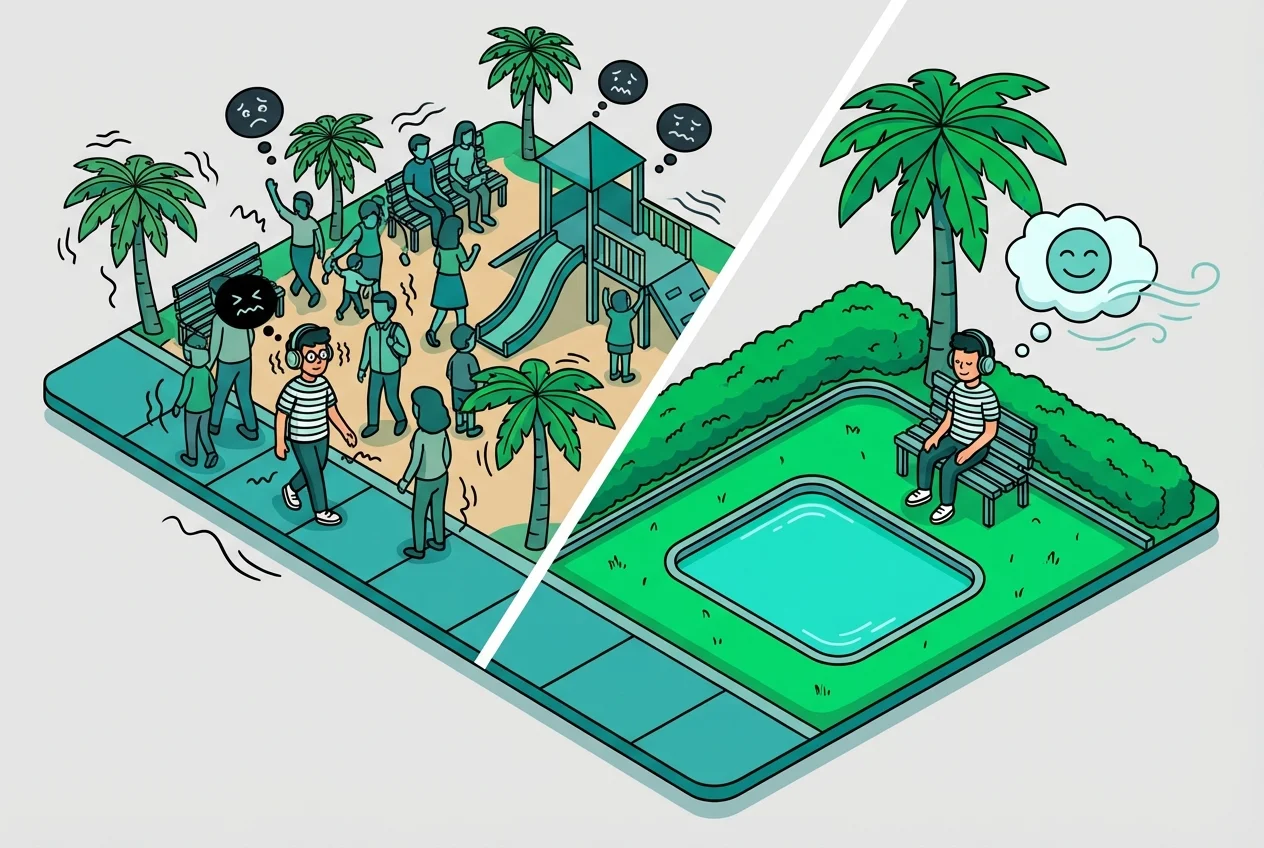
The 'Know Before You Go' Advantage: Real-Time Views for Sensory Needs
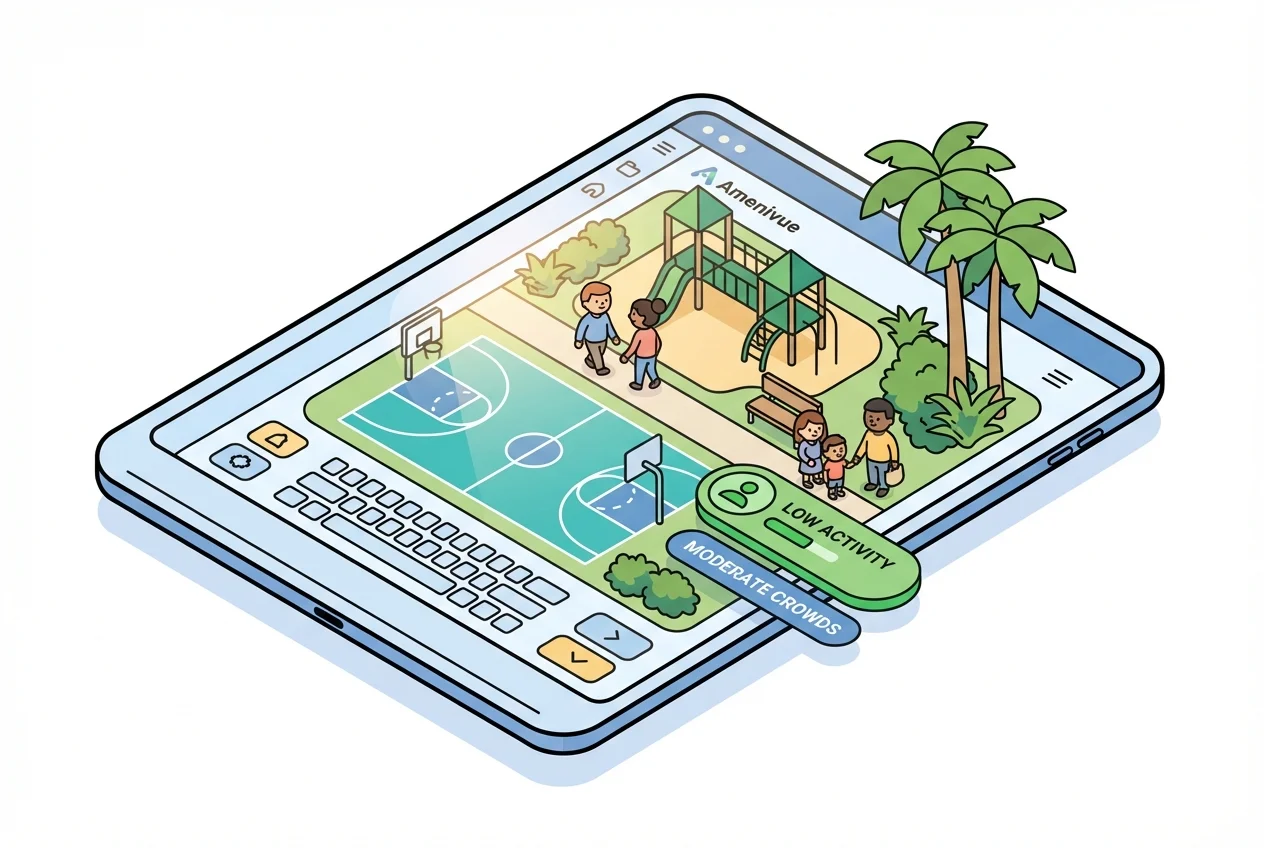
This is where innovative technology steps in to bridge the gap. Amenivue offers real-time camera views of park amenities – from swimming pools and playgrounds to basketball courts and fitness areas. This core functionality provides an invaluable "know before you go" advantage, especially for neurodivergent visitors and their families.
Imagine being able to check the current crowd levels at the splash pad, assess the noise intensity at the skate park, or see if the tennis courts are occupied, all from the comfort of your home. This immediate, visual information provides crucial predictability, allowing individuals to make informed decisions about when and where to visit. If a quiet environment is preferred, a quick check can reveal the least busy times. If a particular amenity is a sensory trigger when crowded, users can simply choose another time or location.
Pro Tip: Empowering Choice
By providing real-time visual data, you empower users to self-regulate their exposure to sensory stimuli. This autonomy significantly reduces anxiety and enhances the overall park experience, making visits more successful and less stressful.
This capability directly addresses the challenges of sensory overload and uncertainty. It reduces the risk of wasted trips that can be incredibly disheartening and disruptive for neurodivergent individuals. Studies indicate that unpredictable environments can increase anxiety by up to 70% in individuals with sensory processing sensitivities. By offering a transparent window into current conditions, Amenivue helps manage sensory input, ensuring a more comfortable, enjoyable, and ultimately, more successful park experience for everyone.
Integrating Smart Technology for Truly Inclusive Park Design
Real-time viewing platforms like Amenivue are not just isolated tools; they are a cornerstone of modern 'smart park' initiatives focused on comprehensive inclusivity. These technologies enable a dynamic approach to accessibility, moving beyond static signage and one-size-fits-all solutions.
Integrating Amenivue into a broader digital accessibility strategy means complementing it with other innovative tools. This could include interactive digital maps that highlight sensory-friendly zones, quiet areas, or designated low-stimulus pathways. Accessible wayfinding apps can guide visitors through the park using clear, concise instructions, reducing cognitive load and navigational stress. Together, these digital tools create a holistic and proactive approach to inclusive park design. For instance, a visitor might use an app to find a quiet picnic spot, then check Amenivue to confirm the nearby playground isn't overly crowded before heading out.
Elements of a Smart, Inclusive Park
- Real-time amenity viewing
- Interactive digital maps
- Sensory-friendly zone indicators
- Accessible digital wayfinding
- Dynamic crowd monitoring
- Personalized experience customization
This fusion of technology creates personalized accessibility experiences, adapting to individual needs rather than forcing individuals to adapt to rigid environments. It represents a significant leap forward, transforming parks into truly responsive and welcoming spaces for the entire community. Discover how smart technology is enhancing public services in our related guide.
Maximizing Impact: Increased Park Usage, Well-being, and Community Engagement
The tangible benefits of providing predictability and reducing barriers through real-time amenity viewing extend far beyond individual comfort. By making parks more accessible and less intimidating, municipalities will see a significant increase in park utilization, particularly among previously underserved neurodivergent populations and their families. When individuals feel confident they can have a positive experience, they are more likely to visit.
This increased participation directly contributes to enhanced community well-being. Parks become true community hubs, fostering a sense of belonging for all residents and promoting active, healthy lifestyles. For neurodivergent individuals, consistent access to safe and enjoyable outdoor spaces can significantly improve mental health and reduce social isolation. Communities adopting inclusive design often see up to a 25% increase in park visitation from groups who previously faced barriers.
Beyond social benefits, the technology also offers valuable data insights. By tracking usage patterns (anonymously and without identifying individuals), park directors can gain a clearer understanding of peak usage times for specific amenities, popular areas, and underutilized spaces. This data can inform future park planning, resource allocation, and targeted improvements, ensuring investments are made where they will have the greatest impact. Adopting real-time viewing technology is a visible commitment to equity, innovation, and an inclusive future, enhancing the municipality's reputation as a forward-thinking community leader.
Funding Your Vision: Writing Cognitive Accessibility into Grant Proposals
For Parks Directors and City Planners looking to implement smart park technologies like Amenivue, securing funding is a crucial step. Fortunately, the focus on cognitive accessibility and inclusive design aligns perfectly with several key grant categories. Look for opportunities under community development grants, accessibility initiatives, smart city programs, public health and wellness funds, and innovation grants. Many foundations and government programs prioritize projects that demonstrate a clear social good and address the needs of diverse populations.
When crafting grant applications, emphasize the social impact and equity aspects of real-time viewing technology. Highlight how it directly supports neurodivergent individuals, reduces anxiety, and fosters greater community participation. Frame it as a data-driven solution that offers measurable outcomes, such as increased park usage and improved well-being metrics. Stress that this technology moves beyond traditional accessibility to create truly inclusive, adaptive public spaces. Demonstrating a proactive, forward-thinking commitment to cognitive accessibility will significantly strengthen your proposals and position your municipality as a leader in equitable urban planning. Explore how live visuals can also boost winter park experiences in this resource.
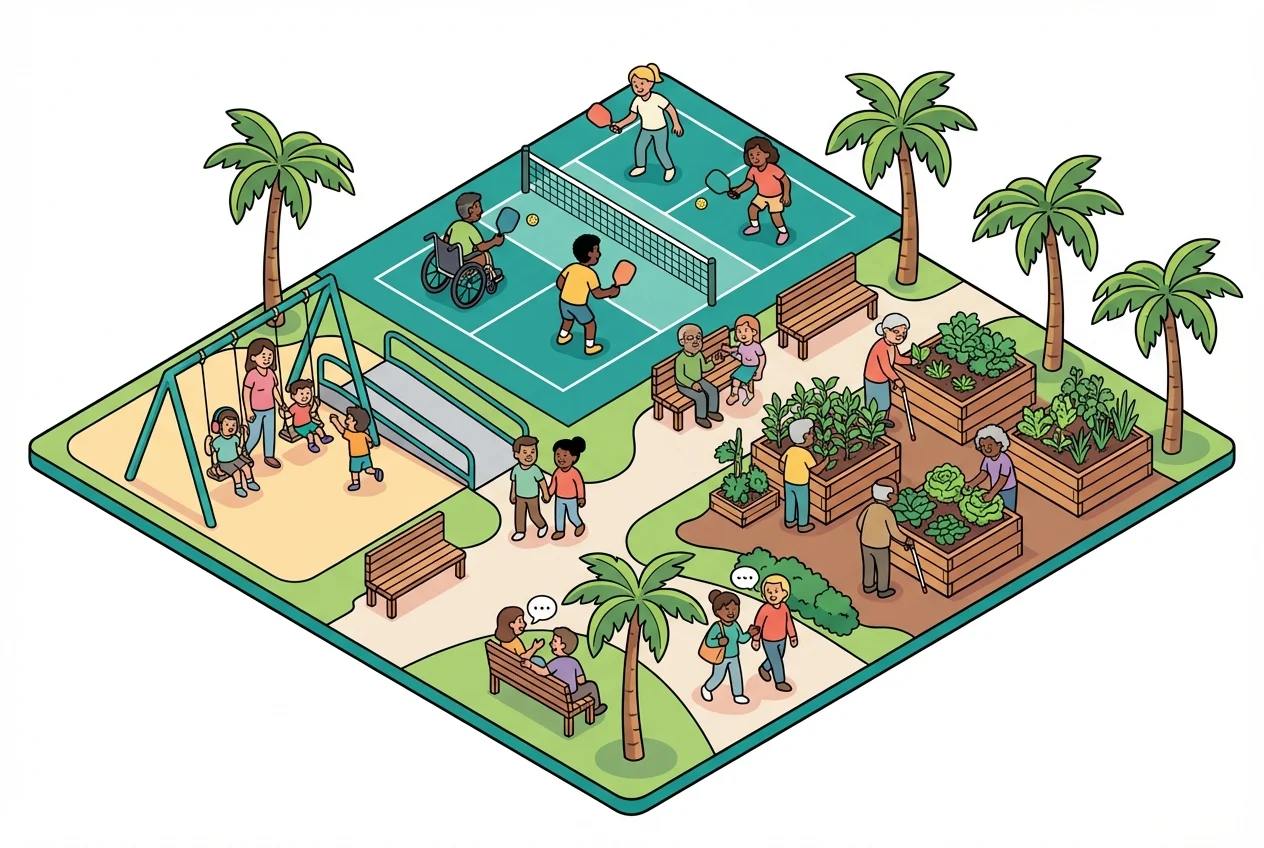
Integrating real-time amenity viewing into park design is a powerful, measurable way to achieve cognitive accessibility, enhance community well-being, and secure competitive grant funding for your smart park initiatives.
Frequently Asked Questions
What is cognitive accessibility in the context of public parks?
Cognitive accessibility refers to the design of spaces that are easy to understand, navigate, and predict for individuals with diverse cognitive abilities, including neurodivergent individuals. It focuses on reducing sensory overload, providing clear information, and minimizing uncertainty to ensure everyone can comfortably and safely enjoy public amenities.
How does real-time viewing technology specifically help neurodivergent park visitors?
Real-time viewing platforms provide live visual information about park amenities, such as crowd levels, noise, and activity. This allows neurodivergent visitors to "know before they go," reducing anxiety by enabling them to choose optimal times and locations that align with their sensory needs and comfort levels, preventing wasted or overwhelming trips.
Is Amenivue a security system?
No, Amenivue is explicitly designed for amenity viewing, not security. Its purpose is to provide transparency about amenity usage and conditions, helping manage expectations, reduce calls, and ensure fair access. The cameras are strategically placed to offer broad views of amenities, not to surveil individuals.
What kind of data can be gathered from real-time viewing, and how is it used?
Real-time viewing platforms can gather anonymous data on amenity usage patterns, peak times, and popular areas. This data is invaluable for park directors and city planners to inform future planning, optimize resource allocation, identify underutilized spaces, and justify investments in park improvements based on actual community needs.
How can my municipality fund the implementation of smart park technologies like Amenivue?
Municipalities can seek funding through various grant programs, including community development, accessibility initiatives, smart city grants, public health funds, and innovation grants. Emphasizing the social good, equity, data-driven solutions, and enhanced community well-being in your grant proposals will strengthen your application.
Does implementing real-time views replace other accessibility features?
No, real-time viewing technology complements, rather than replaces, other accessibility features. It integrates into a broader digital accessibility strategy, working alongside physical accessibility measures, sensory-friendly zones, and accessible wayfinding tools to create a comprehensive and truly inclusive park experience.
Embracing cognitive accessibility through smart park technology is a commitment to creating public spaces where everyone feels welcome, understood, and empowered. To see how Amenivue can transform your community's parks and enhance inclusivity, explore our solutions or request a personalized demonstration today.