Introduction: The New Baseline for Public Services
In today's hyper-connected world, the smartphone isn't just a communication device; it's a remote control for daily life. From ordering groceries to hailing a ride, digital convenience has become the norm, shaping citizen expectations across every sector. This shift has created a growing disparity between the seamless digital experiences offered by the private sector and the often static, information-scarce offerings of public services. For Parks & Recreation departments and city planners, this gap presents both a challenge and a monumental opportunity. The solution lies in embracing smart parks technology, particularly real-time amenity viewing, to provide the on-demand digital access citizens now expect. This article will explore how cities can adapt to meet the 'mobile-first' citizen's demands, transforming public facilities into truly accessible, modern community assets.

The On-Demand Citizen: Reshaping Public Sector Expectations
The "Amazon Effect" has fundamentally reshaped how individuals interact with services, fostering an expectation of instant information and unparalleled convenience. Whether it's tracking a food delivery minute-by-minute or knowing exactly when a ride-share will arrive, the private sector has set a new standard for accessibility and transparency. This paradigm has seamlessly transferred to citizens' expectations of their municipal services. Residents no longer want to guess if the local skating rink is open or if the community pool is overcrowded; they expect to check its live status, occupancy, and availability directly from their phones.
Did You Know?
A recent study indicated that over 85% of adults in developed nations now own a smartphone, making mobile devices the primary gateway to information and services. Citizens are increasingly looking for this same level of digital interaction from their local government.
For the "2026 taxpayer," real-time digital access to public amenities will not be a luxury but a fundamental right. Imagine a parent wanting to take their child to the playground and being able to see its current crowd level, or a tennis enthusiast checking court availability before packing their gear. These types of on-demand insights are becoming baseline expectations, pushing municipal facilities to evolve beyond traditional, static information channels and embrace dynamic, mobile-first solutions. Cities that fail to meet these evolving demands risk falling behind in citizen satisfaction and engagement.
Beyond Static Pages: The Imperative for Real-Time Amenity Data
Traditional information sources for public amenities—like static webpages, outdated PDF schedules, or phone calls to a busy front desk—are no longer sufficient. These methods often lead to frustration, wasted trips, and an inefficient use of both citizen and staff time. The modern citizen demands dynamic, live information: Is the tennis court actually free right now, or is it just listed as "open"? Is the skating rink crowded to the point of being unusable, even if the doors are technically open?
The shift from "open" to "available" is critical. Providing real-time visual and occupancy data transforms how citizens interact with public amenities, moving from passive information consumption to active, informed decision-making.
This imperative for real-time data is where smart parks technology, such as non-security live camera feeds and IoT sensors, truly shines. These technologies provide accurate, up-to-the-minute status updates on amenity usage, occupancy levels, and availability. Crucially, these systems are designed not for surveillance, but for convenience and operational efficiency, focusing on aggregate data and visual indicators of availability. Integrating this real-time data into existing citizen engagement apps and city portals offers seamless access, creating a unified digital experience. This approach aligns perfectly with modern expectations, allowing residents to check facility status with the same ease they check their social media.
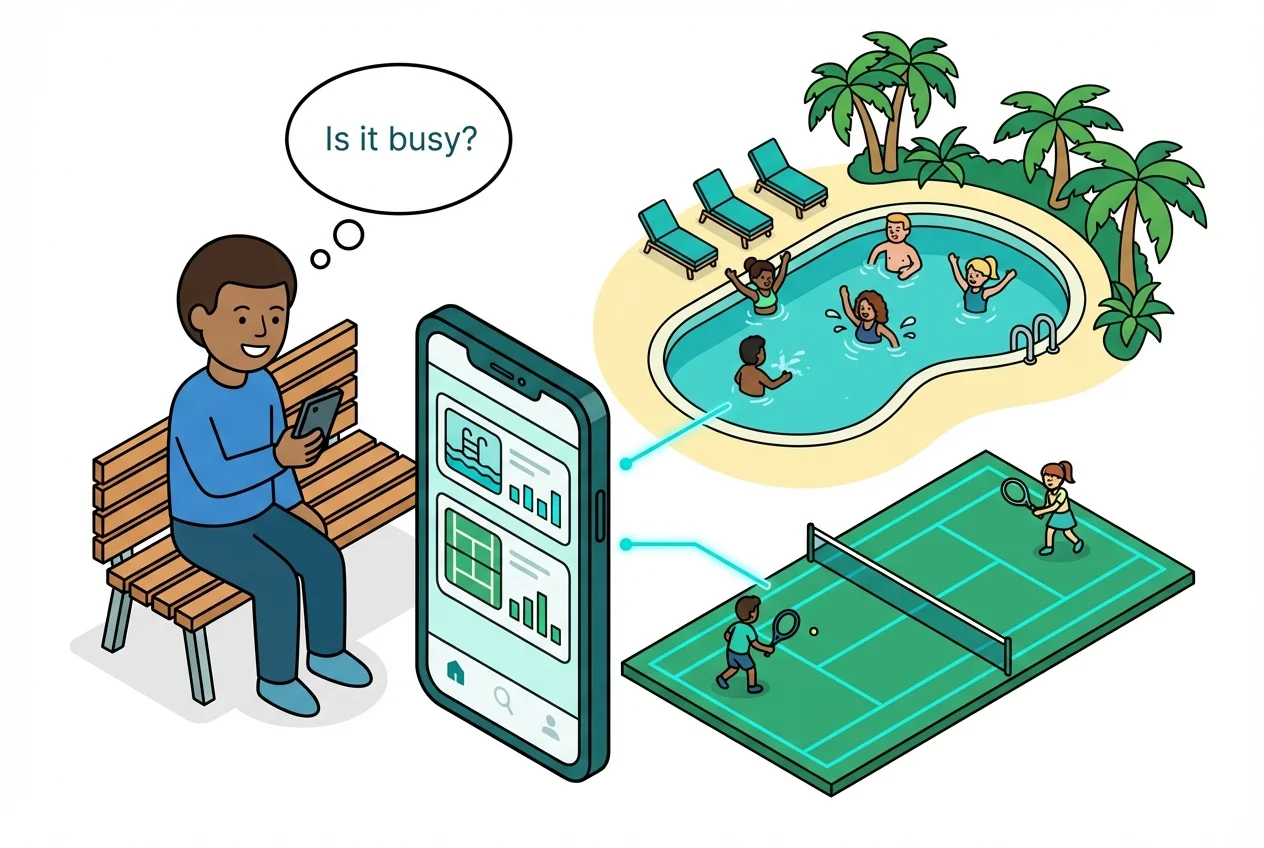
Visualizing Availability: Eliminating Wasted Trips and Frustration
The most significant benefit of real-time amenity viewing is the ability for residents to visualize availability, making informed decisions before ever leaving home. There's a critical difference between a facility merely being "open" and it being truly "available" for use. An open pool might be overcrowded, a tennis court might be fully booked, or a fitness center might have all equipment in use. Without real-time insight, a trip to the facility can quickly turn into a frustrating waste of time and fuel.
Resident Benefits of Real-Time Views
- Saves Time:
- Avoids trips to overcrowded or unavailable facilities.
- Reduces Frustration:
- Prevents disappointment from finding amenities unusable.
- Empowers Choice:
- Allows residents to select less busy times or alternative amenities.
- Boosts Satisfaction:
- Enhances the overall experience with public services.
- Saves Fuel:
- Reduces unnecessary driving by confirming availability remotely.
By providing live visual feeds of pool occupancy levels, gym equipment usage, tennis court availability, or even park crowd density, cities empower their residents. This transparency reduces citizen frustration and significantly enhances satisfaction, transforming potential negative experiences into positive, efficient interactions. For example, a resident can check a municipal app, see that the basketball court is currently empty, and head over confidently, knowing they won't arrive to find it fully occupied. This level of foresight is invaluable in a fast-paced world, contributing directly to a higher quality of life for community members.
Boosting Operational Efficiency & Staff Empowerment
Implementing smart parks technology extends benefits far beyond citizen satisfaction, significantly enhancing internal operational efficiency and empowering municipal staff. One of the most immediate impacts is the substantial reduction in call volume to front desk staff. Instead of answering repetitive questions about facility availability or crowd levels, staff can focus on higher-value citizen interactions, program development, and direct community engagement.
Real-time data also enables better resource allocation. Parks & Rec staff can monitor usage patterns to optimize cleaning, maintenance, and supervision schedules. For instance, if a specific gym area consistently sees high usage during certain hours, cleaning can be scheduled around these peaks, or additional staff deployed to manage demand. Furthermore, the aggregated data provides invaluable insights for city planners, informing future investment decisions, amenity development, and master planning. Understanding which amenities are most popular and at what times allows for strategic expansion or renovation, ensuring taxpayer dollars are spent on facilities that truly meet community needs. Empowering municipal employees with these advanced tools leads to a more responsive, efficient, and data-driven approach to public service.

Fostering Fair & Equitable Community Access
A core tenet of public services is equitable access for all residents. Smart parks technology, particularly real-time amenity viewing, plays a crucial role in upholding this principle. By making true amenity availability transparent and instantly accessible, cities ensure that all residents, regardless of their schedule or proximity to the facility, have an equal opportunity to utilize public resources. This transparency helps prevent the monopolization of popular facilities by a few individuals or groups, promoting wider community participation and engagement.
Equity in Action
Consider offering multi-lingual interfaces for your amenity viewing platform and ensuring accessibility features for those with disabilities. Bridging digital divides means making the technology accessible to everyone, not just those with the latest smartphones.
Moreover, by offering user-friendly interfaces that complement existing communication channels, cities can bridge potential digital divides. While digital access is paramount, it's essential to integrate these solutions thoughtfully, ensuring they enhance, rather than replace, traditional methods for those who may need them. Ultimately, providing clear, unbiased, real-time information builds trust and transparency within the community. When residents know they have fair access and accurate information, their faith in local government strengthens, fostering a more cohesive and engaged community. You can read our guide on equitable access to amenities for more insights.
Conclusion: Paving the Way for a Future-Ready Community
The digital transformation of public services is not a distant future; it's a present imperative driven by the mobile-first expectations of today's citizens. Embracing smart parks technology and real-time amenity viewing offers undeniable benefits, from enhancing citizen satisfaction and eliminating wasted trips to boosting operational efficiency and ensuring equitable access. For Parks & Recreation Directors and City Planners, the time to explore these innovative solutions is now. By investing in citizen engagement apps and digital tools that provide on-demand access, forward-thinking cities can position themselves as leaders in citizen satisfaction and operational excellence, ready not just for 2026, but for decades to come.

Frequently Asked Questions
What exactly is "smart parks technology"?
Smart parks technology refers to the integration of digital tools and data-driven solutions within public recreational spaces to enhance user experience, operational efficiency, and sustainability. This can include real-time amenity viewing systems, IoT sensors for environmental monitoring, smart irrigation, and interactive digital signage, all designed to make parks and facilities more responsive and accessible.
Is real-time amenity viewing a security surveillance system?
No, real-time amenity viewing, as provided by Amenivue, is distinctly different from security surveillance. Our systems are designed for convenience and operational insight, focusing on aggregate data like occupancy levels and general availability, not individual identification. The cameras are positioned to provide broad views of amenity usage, helping citizens make informed decisions about when to visit, without compromising privacy.
How does this technology help city staff and operations?
This technology significantly reduces the administrative burden on city staff by cutting down on repetitive phone calls about facility availability. It also provides valuable data on usage patterns, allowing for optimized staffing, maintenance scheduling, and resource allocation. Staff can proactively identify busy periods or underutilized amenities, leading to more efficient operations and better long-term planning.
What about the cost of implementing such systems?
The initial investment for smart parks technology can vary depending on the scale and complexity of the deployment. However, the long-term benefits, including increased citizen satisfaction, reduced operational costs (e.g., lower call volumes, optimized maintenance), and data-driven planning, often provide a significant return on investment. We encourage you to view pricing and discuss your specific needs with our team.
How does real-time amenity viewing ensure equitable access?
By providing transparent, real-time information on amenity availability, the system ensures that all residents have equal access to knowledge about facility status. This prevents situations where only those who can call repeatedly or physically visit can determine availability. It democratizes access to information, allowing everyone to plan their visits effectively and promoting fair usage of public resources.
Ready to transform your city's public amenities and meet the expectations of the modern citizen? Schedule a demo with Amenivue today to see how our real-time viewing platform can revolutionize your Parks & Recreation services.