The landscape of Homeowners Associations is rapidly evolving, driven by an undeniable demand for greater transparency and accountability. As we approach 2026, new legislative mandates in states like Florida and California are setting higher standards for openness and civility within community governance. This shift highlights a persistent challenge: the 'trust deficit' that often exists between HOA boards and their residents. Misunderstandings about maintenance, amenity availability, or budget allocation can quickly erode confidence and foster discord. But what if there was a proactive strategy to bridge this gap? This article explores how visual transparency, particularly through real-time amenity viewing, offers a powerful and effective solution to build trust, streamline operations, and cultivate truly stronger communities.

The Shifting Landscape: Why Transparency is Non-Negotiable in 2026
Resident expectations for immediate, accessible information have never been higher. In an age of instant digital communication, homeowners anticipate real-time updates and verifiable facts about their community's operations and amenities. This isn't just a preference; it's becoming a regulatory imperative. States like Florida and California are leading the charge with new legislative mandates that push for stricter compliance, more comprehensive reporting, and greater overall transparency from HOA boards. These laws aim to empower residents and ensure boards operate with the utmost integrity.
The cost of low trust within an HOA can be significant. It manifests as increased disputes, a marked reduction in resident engagement, and even potential legal challenges stemming from perceived mismanagement or a lack of accountability. When residents feel uninformed or unheard, the community fabric frays, making effective governance incredibly difficult. A recent industry survey revealed that over 60% of resident complaints to HOA boards are related to a lack of clear communication or perceived transparency.
Proactive transparency is no longer just a best practice; it's a strategic advantage. Moving beyond mere compliance, it actively safeguards your community against disputes, enhances resident satisfaction, and positions your HOA as a forward-thinking, resident-centric organization.
By embracing proactive transparency, boards can transform a potential liability into a powerful asset. It demonstrates a commitment to good governance, fosters a sense of shared ownership, and builds a resilient community where trust is the foundation.
Beyond Newsletters: The Power of 'Seeing is Believing' for HOAs
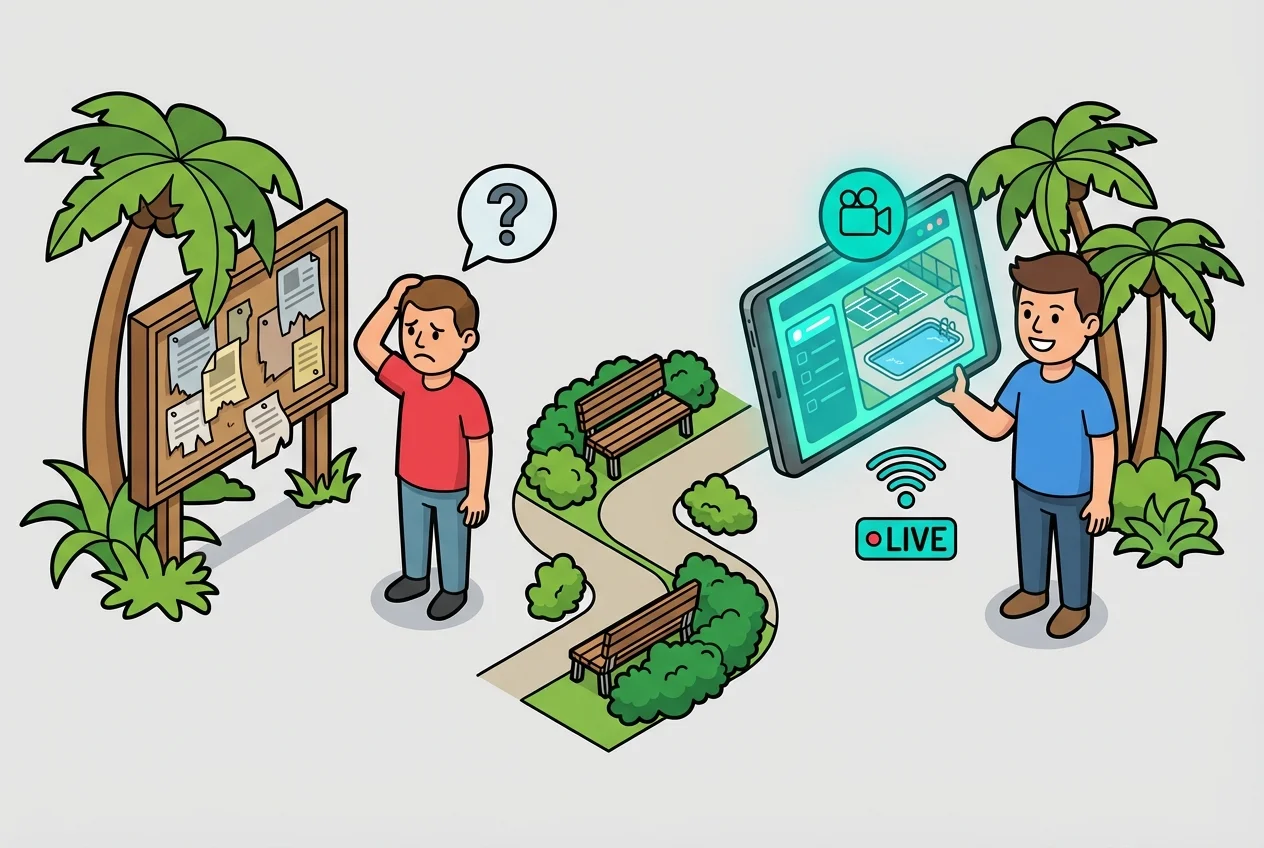
Traditional communication methods, while still valuable, often fall short in conveying the dynamic, real-time status of community amenities. Emails, newsletters, and bulletin board postings are static; they can quickly become outdated, leading to frustration and wasted trips for residents. Imagine a resident planning a swim, only to arrive at the pool to find it closed for unexpected maintenance – a situation that could have been avoided with real-time information.
This is where the power of 'seeing is believing' comes into play. Visual proof immediately validates board actions and maintenance efforts in a way words simply cannot. When residents can visually confirm that the pool is sparkling clean, the gym equipment is available, or the tennis courts are free, it instills a profound sense of confidence. This direct observation significantly reduces speculation, misinformation, and the rapid spread of rumors that can plague community forums.
Limitations of Traditional Communication
- Information quickly becomes outdated
- Leads to resident frustration and wasted trips
- Cannot convey real-time status effectively
- Prone to misinterpretation and rumors
By providing tangible, verifiable information, HOAs empower residents to make informed decisions about their amenity usage. This transparency isn't just about providing data; it's about building an active, engaged community where residents feel respected and confident in their board's management. It significantly reduces the burden on front desk staff, with some communities reporting a reduction of up to 85% in amenity-related calls after implementing visual solutions.
Real-Time Amenity Viewing: A Cornerstone of Modern HOA Governance
In the evolving landscape of HOA governance, real-time amenity viewing stands out as a critical tool for building trust and operational efficiency. Imagine residents having instant access to live camera views of their community's pool, fitness center, or sports courts. This isn't about surveillance; it's about providing objective, verifiable information.
Live camera views from platforms like Amenivue confirm amenity cleanliness, availability, and condition at a glance. Residents can answer questions like, 'Is the pool sparkling clean and ready for use?' or 'Is the fitness center crowded right now?' before they even leave their homes. This level of transparency validates maintenance schedules and contractor performance in real-time, allowing boards to visually confirm that services are being delivered as promised, directly tying back to responsible budget allocation.
Moreover, real-time viewing ensures fair access to amenities. By allowing residents to see current usage levels, it prevents overcrowding and promotes equitable usage, reducing potential conflicts. Perhaps one of its most powerful applications is in resolving disputes. When a resident claims an amenity was unclean or misused, objective, visual evidence can instantly clarify the situation, moving beyond 'he said, she said' arguments to factual resolution. This not only saves time for property managers and board members but also reinforces the board's commitment to fairness and accuracy. To learn more about our features and how they can benefit your community, explore our platform.
Verify Cleanliness
Residents can see if the pool is clean before visiting, reducing wasted trips and complaints.
Check Availability
Know if the gym is crowded or the tennis court is free, ensuring fair and efficient use.
Confirm Maintenance
Boards can visually confirm contractor work, ensuring services are delivered as promised and budgets are well-spent.

Navigating Implementation: Privacy, Purpose, and Best Practices
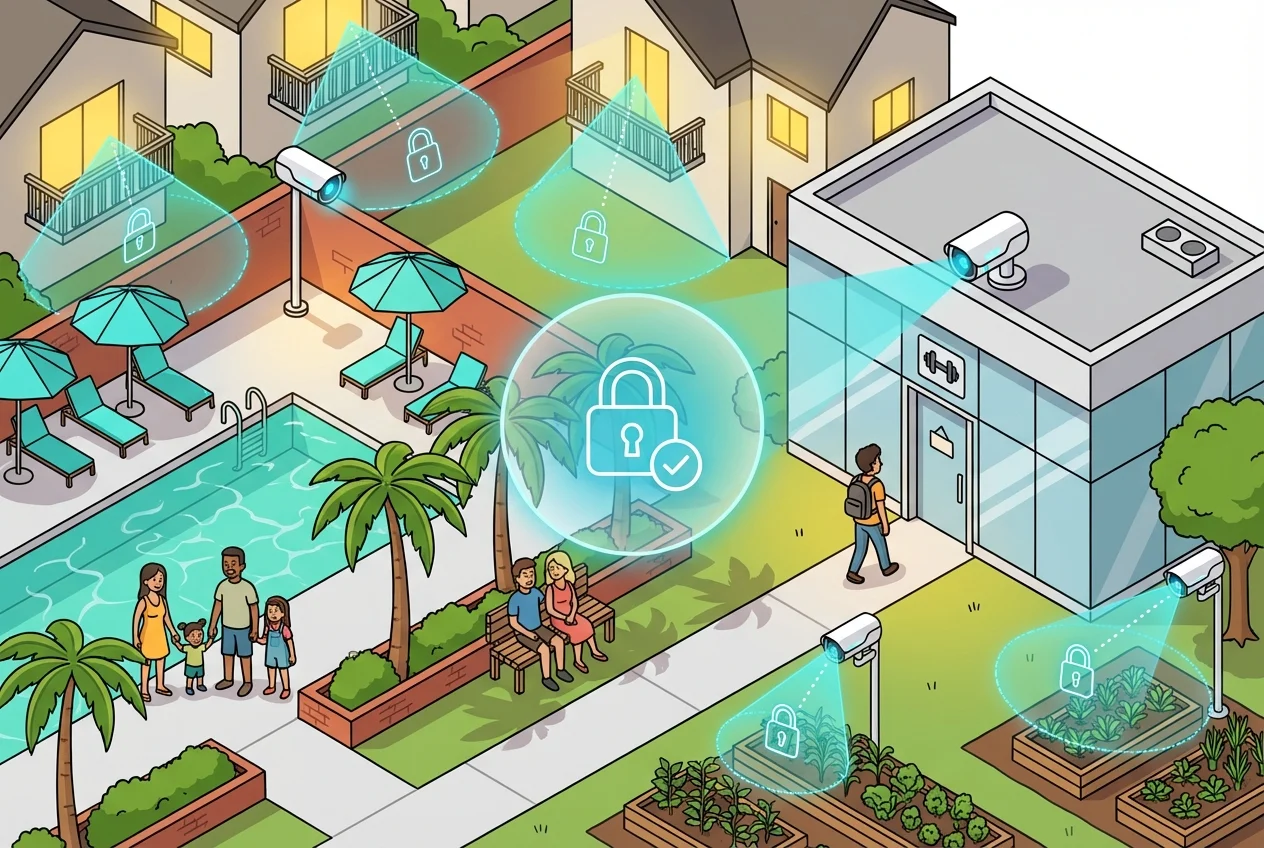
Implementing real-time amenity viewing requires careful consideration, particularly regarding resident privacy. It's crucial to clearly differentiate amenity viewing from security monitoring. The purpose of amenity cameras is not surveillance of individuals, but rather providing information about the state of a public amenity. This distinction is paramount and must be communicated effectively to residents.
Addressing resident privacy concerns begins with strategic camera placement. Cameras should be positioned exclusively in public amenity areas like pool decks, fitness center floors, and court entrances, never in private spaces, changing rooms, or areas where an expectation of privacy exists. The focus should always be on the amenity itself, not individual faces or activities.
Pro Tip: Communicate Clearly
Before launching any visual transparency system, hold town hall meetings and distribute clear informational materials. Explain the system's purpose, how it benefits residents (e.g., preventing wasted trips), and the strict measures taken to protect privacy. Emphasize that it's about amenity status, not individual monitoring.
Best practices for transparent communication include:
- Clear Signage: Post visible signs at amenity entrances indicating the presence of live viewing cameras and their purpose.
- Educational Materials: Provide residents with FAQs, tutorials, and a dedicated section on your HOA website explaining how to access and use the live views, along with privacy policies.
- Opt-in/Opt-out (where applicable): While live views of public spaces are generally permissible, offering residents clear choices and information fosters greater trust.
- Data Retention Policies: Establish and communicate clear policies on how long footage is stored and who has access to it.
Successful adoption hinges on resident education and clear usage guidelines. When residents understand the benefits – such as avoiding wasted trips and confirming amenity availability – and trust that their privacy is protected, they become advocates for the system. For a deeper dive into privacy considerations, you can read our guide on Amenity Cameras & Privacy: A Resident-First Guide to HOA Data Protection.
Conclusion
The journey towards enhanced HOA transparency in 2026 and beyond is multifaceted, but visual strategies like real-time amenity viewing offer a powerful, forward-thinking solution. By embracing this approach, HOA boards can unlock a host of benefits: fostering deeper trust with residents, significantly boosting operational efficiency, ensuring proactive regulatory compliance, and ultimately forging stronger, more harmonious community bonds. It moves beyond simply telling residents about their community to showing them, building confidence through verifiable reality. This isn't just about adopting new technology; it's about evolving governance to meet modern expectations and build a more connected, transparent, and thriving community for everyone.
Ready to transform your community's transparency and trust? Schedule a demo with Amenivue today to see how our real-time amenity viewing platform can empower your HOA board and delight your residents.