The pressure on Parks & Recreation budgets is a persistent challenge for municipal planners and directors. Faced with competing demands and often tight fiscal constraints, justifying every dollar spent on community amenities becomes critical. This environment often leads to difficult decisions, with programs and facilities perceived as 'underutilized' being first in line for cuts. The core of this problem lies in the 'invisible user' phenomenon – countless residents who spontaneously enjoy parks, courts, and fitness areas, but whose usage isn't formally tracked. This lack of concrete data leaves valuable community assets vulnerable during budget reviews. Fortunately, modern solutions offer a powerful counter-narrative: real-time, camera-based amenity usage data. By providing objective metrics, this technology can vividly demonstrate the true value of recreation facilities, enabling data-driven budget justifications and ensuring essential community services continue to thrive.

The 'Invisible User' Problem: Why Traditional Metrics Fall Short
Traditional methods for assessing facility usage in Parks & Recreation departments often paint an incomplete picture. Relying solely on program registration numbers, anecdotal resident feedback, or infrequent manual headcounts fails to capture the full scope of community engagement. How do you quantify the family enjoying a spontaneous picnic, the individual using the outdoor fitness equipment before work, or the impromptu pick-up basketball game that forms every evening? These 'invisible users' are the lifeblood of vibrant community spaces, yet their invaluable contributions to well-being and social cohesion frequently go unrecorded.
The "invisible user" phenomenon means that a significant portion of valuable community amenity usage goes untracked, making it difficult to justify budgets based on traditional metrics alone.
This critical data gap leaves programs and facilities vulnerable when budget season arrives. Without hard numbers to demonstrate consistent utilization, even well-loved amenities can be perceived as underused, leading to funding cuts or even closure. For instance, while structured programs might account for 20% of total facility use, spontaneous and informal activities often make up the remaining 80%, yet only a fraction of this is ever formally tracked. This disparity creates a distorted view of actual community benefit. By overlooking these segments—casual walkers, individual fitness enthusiasts, dog park visitors, or friends meeting for an unorganized game—municipalities risk undermining the very services that enhance quality of life and foster community spirit.

Beyond Headcounts: Capturing True Foot Traffic with Camera-Based Data
Modern technology offers a transformative approach to understanding amenity usage, moving beyond subjective observations to objective, real-time data. Camera-based viewing platforms, like Amenivue, utilize non-security cameras strategically placed to monitor amenity spaces such as pools, tennis courts, fitness centers, and community gardens. Crucially, these systems are designed with privacy at their forefront, focusing on aggregate usage patterns rather than individual identification. They function as sophisticated data collectors, counting people and tracking movement within defined zones without recording identifiable personal information.
Privacy-First Approach
Amenity viewing platforms are engineered to prioritize privacy. They focus on anonymized data collection and aggregate usage metrics, ensuring community trust by never recording or storing identifiable personal information, distinguishing them clearly from surveillance systems.
The insights gained from these systems are comprehensive and invaluable. Parks & Rec departments can capture:
- Peak Usage Times: Pinpoint exactly when facilities are most active.
- Average Session Duration: Understand how long users typically engage with an amenity.
- Occupancy Rates: Get real-time and historical data on how full a space is.
- Frequency of Use: Track how often different amenities are accessed throughout the day, week, or season.
This objective data provides a clear, undeniable picture of facility utilization. Unlike traditional surveillance, which focuses on security and individual identification, amenity viewing systems are purpose-built for operational intelligence. They provide a transparent, data-driven narrative that can increase reported facility utilization by up to 50% compared to manual methods, offering a robust foundation for budget justification. This distinction is vital for maintaining community trust while simultaneously gathering the metrics needed for smart municipal asset management. For more on how visual transparency builds trust, explore our related guide.
Key Data Points Captured
- Real-time Occupancy
- Peak Usage Hours
- Average Session Length
- Facility Turnover Rates
- Usage Heatmaps
Case Study in Action: Proving Value and Saving 'Quiet' Facilities
Consider a common scenario: a city council is reviewing the budget, and a particular community asset – perhaps a lesser-known tennis court complex in a quiet neighborhood, a small community garden plot, or an infrequently staffed fitness area – is flagged for potential budget cuts due to perceived low usage. On paper, registration numbers for organized events might be modest, and manual checks during business hours might show sparse activity. The initial assumption is that the facility is underutilized and a drain on resources.
This is where objective usage data intervenes. By deploying a camera-based amenity viewing system, the Parks & Rec department can gather irrefutable evidence. For example, data from the tennis courts might reveal consistent, high-value utilization during early mornings, evenings, and weekends by casual players, even if no formal leagues are scheduled. The community garden might show a steady stream of residents tending plots outside of peak staff hours. The fitness area, initially thought to be empty, could be consistently used by a small but dedicated group of residents for short, intense workouts throughout the day.
"Before Amenivue, we were constantly fighting perception battles. The data didn't just save our community pool from a 25% budget cut; it showed us it was being used 30% more than we ever thought, especially during off-peak hours."
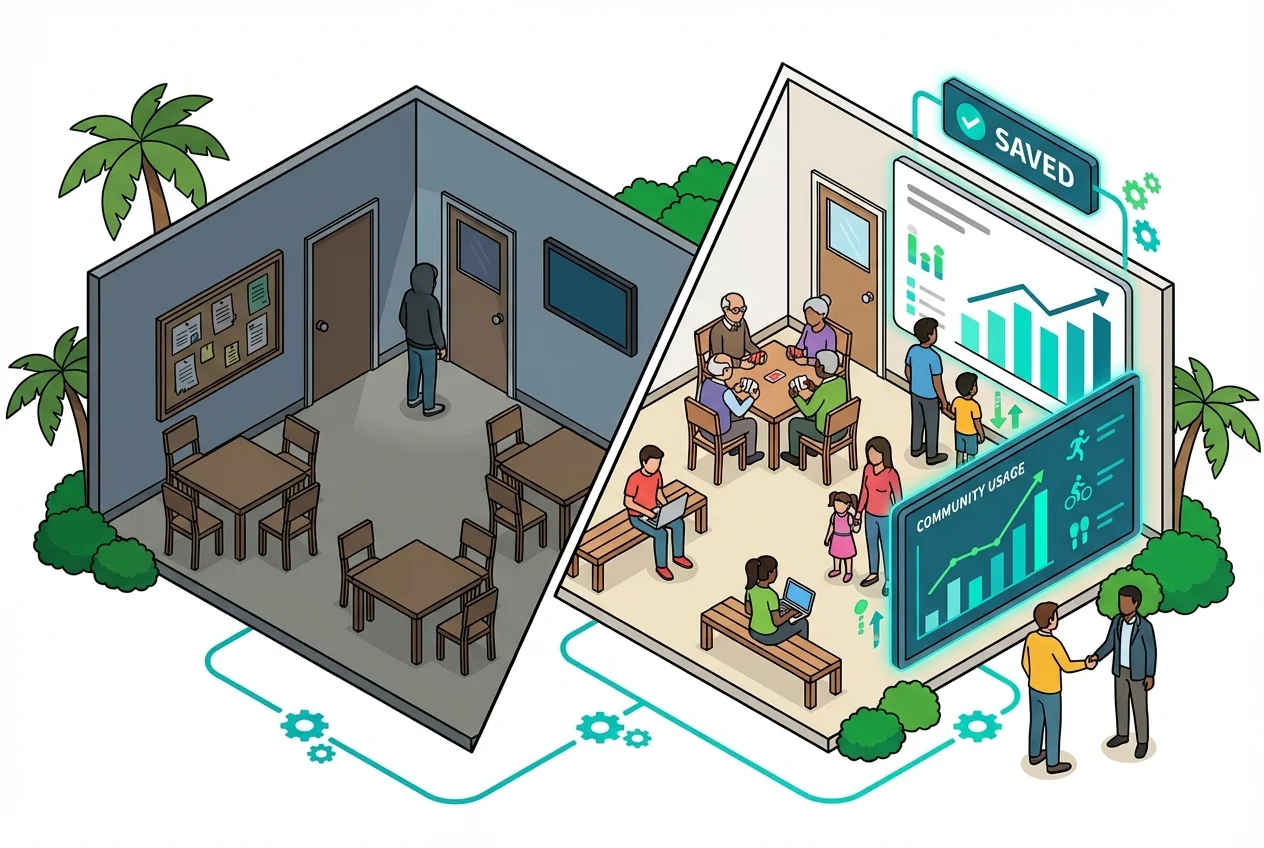
The tangible outcomes are profound. In one hypothetical instance, a city saved its community garden program from a 30% budget cut by demonstrating 80% daily occupancy through usage data. This data contradicted initial assumptions, showcasing that while 'quiet,' the facility was a consistent, high-value asset for residents. The Parks & Rec Director, armed with detailed reports on peak times, average session durations, and unique visitor counts, could present a compelling case to the city council. This evidence successfully justified continued funding, prevented program closure, and in some cases, even led to advocacy for expansion or improved amenities, transforming a 'quiet' facility into a recognized, indispensable community asset. This data-driven approach also helps in optimizing gym layouts in fitness centers, ensuring all areas are utilized effectively.
Optimizing Operations: Data-Driven Staffing, Maintenance, and Programming
The benefits of amenity usage data extend far beyond budget justification, offering a powerful tool for optimizing daily operations and long-term planning.
Staffing Efficiency
Understanding when facilities are busiest and when they are quiet allows for intelligent staffing schedules. Parks & Rec departments can ensure lifeguards, front desk staff, or maintenance crews are present when needed most, reducing overstaffing during off-peak hours and preventing understaffing during peak times. This leads to significant operational cost savings and improved service delivery.
Predictive Maintenance
Usage data can be correlated with wear and tear on facilities. High-traffic areas or frequently used equipment will show higher usage metrics, signaling the need for more frequent inspections and proactive maintenance. This predictive approach extends the lifespan of assets, reduces emergency repairs, and ensures facilities remain safe and appealing, preventing wasted trips for residents due to unexpected closures. Learn more about preventing wasted trips with live status updates.
Program Development
Data can highlight underserved times or demographics. If a basketball court is consistently empty during weekday mornings, it might indicate an opportunity to introduce a new senior fitness class or a youth skills clinic. Conversely, if a pool is consistently overcrowded during specific hours, it could prompt the creation of additional programming or dedicated lap swim times to better manage congestion. This ensures new programs are developed based on actual community needs and usage gaps, maximizing participation and impact.
Resource Allocation
With objective data, municipalities can make informed decisions on where to invest capital improvements or allocate operational budgets for maximum community impact. This might mean upgrading a heavily used playground, adding lighting to a popular evening trail, or renovating a fitness center that consistently shows high occupancy rates, ensuring that every dollar spent yields the greatest return in community well-being.

Data-Driven Advocacy: Securing Future Funding & Growth for Parks & Rec
In an era where every municipal dollar is scrutinized, the ability to present a compelling, evidence-based argument is paramount for Parks & Recreation departments. Amenity usage data empowers Directors and City Planners to move beyond anecdotal evidence and subjective appeals, transforming their budget proposals into irrefutable cases for continued investment and growth.
By providing objective metrics, P&R leaders can demonstrate the tangible value of their facilities and programs to city councils, stakeholders, and the wider community. This shifts the conversation from "we think residents use this" to "data shows this amenity serves X number of residents for Y hours per week, generating Z community benefit." This data-focused narrative resonates powerfully with decision-makers who are often focused on measurable outcomes and fiscal responsibility.
Furthermore, leveraging historical and real-time usage data enables strategic long-term planning. Departments can identify trends, forecast future needs, and proactively propose improvements or expansions based on projected demand, demonstrating foresight and fiscal prudence. This proactive approach not only helps secure future funding but also fosters greater transparency and accountability. By openly showcasing how public assets are being utilized and the value they bring, Parks & Rec departments can build stronger community trust and garner increased support for their vital recreation initiatives. This level of transparency also aids in streamlining multi-venue management for larger municipal operations.
Conclusion: Empowering Parks & Rec for a Data-Driven Future
The future of Parks & Recreation hinges on its ability to adapt to a data-driven world. By embracing modern solutions that provide real-time amenity usage data, departments can confidently justify budgets, optimize operations, and strategically advocate for the programs and facilities that enrich community life. This isn't just about preventing budget cuts; it's about building more resilient, responsive, and valuable recreation services that truly meet the evolving needs of residents. Empower your department with the insights needed to make informed decisions and secure a vibrant, active future for your community.
Discover how Amenivue can transform your municipal asset management. Request a personalized demo today to see our platform in action and unlock the power of amenity usage data for your Parks & Recreation department.
Frequently Asked Questions
How does amenity viewing technology ensure user privacy?
Amenity viewing platforms are designed with a strict privacy-first approach. They utilize non-security cameras that focus on aggregate usage patterns and occupancy rates rather than individual identification. No personal data, facial recognition, or identifiable images are recorded or stored, ensuring that the focus remains on facility utilization metrics while respecting community trust and privacy.
Can this data help justify new program development?
Absolutely. By identifying periods of low usage or specific amenities that are underutilized, the data can highlight opportunities for new programming. For example, if a community room is largely empty on weekday afternoons, it might be an ideal time to launch a senior social club or youth workshop, providing data-backed justification for resource allocation to new initiatives.
Is the installation process disruptive to existing facilities?
Installation of amenity viewing cameras is typically non-disruptive. The cameras are strategically placed to cover the desired amenity areas without interfering with normal operations. Amenivue works with facilities to ensure a smooth setup process that minimizes any impact on resident access or daily routines.
How accurate is the usage data collected?
Modern amenity viewing systems employ advanced sensor technology and algorithms to provide highly accurate usage data. They can count individuals, track movement patterns, and calculate occupancy rates with precision, offering a far more objective and reliable measure of facility utilization than traditional manual counts or anecdotal observations.
What kind of ROI can Parks & Rec departments expect from implementing such a system?
Parks & Rec departments can expect significant ROI through various avenues:
- Budget Justification: Preventing cuts and securing funding for valuable programs.
- Operational Efficiency: Reducing staffing costs by optimizing schedules and extending asset lifespan through predictive maintenance.
- Increased Engagement: Developing data-backed programs that attract more participants, leading to higher community satisfaction and potential revenue generation.
- Strategic Planning: Making informed capital investment decisions that maximize community impact.