The undeniable joy of watching dogs frolic freely in an urban park is a cornerstone of community life. Yet, as our cities grow and dog ownership rises, these beloved spaces face an escalating challenge: severe overcrowding, particularly during the dreaded 'after-work' rush between 5-7 PM. This concentration of canine energy, while seemingly harmless, creates a multifaceted problem. It dramatically increases the risk of dog fights and injuries, accelerates turf degradation, and leads to widespread user frustration. The good news? We don't necessarily need more parks; we need smarter park management. By leveraging real-time visibility and data, urban planners and community managers can flatten peak usage curves, fostering a safer, more enjoyable, and sustainable experience for every wagging tail and their human companion.

The 'After-Work' Rush: Why Peak Usage is a Critical Problem
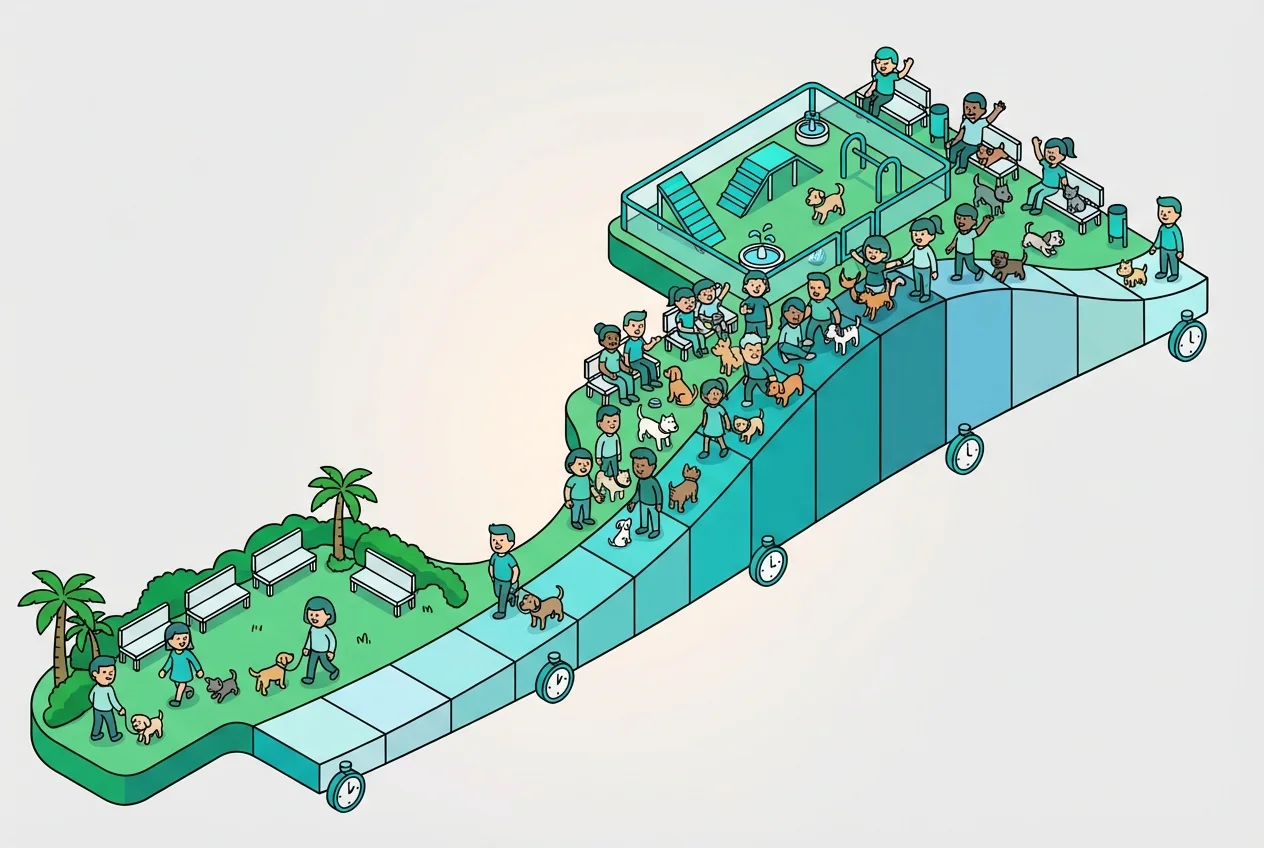
The daily exodus from offices often coincides with a surge of energy at urban dog parks. This "after-work" rush, typically between 4 PM and 7 PM, transforms vibrant play areas into densely packed environments. Studies show that urban dog parks can see up to 70% of their daily visitors concentrated within a 2-hour window during evening peak times, leading to a high dog-to-space density that poses immediate and long-term problems.
Pro Tip: Monitor Peak Hours
Understanding your park's specific peak hours through observation or preliminary data collection is crucial. This insight forms the foundation for effective crowd management strategies, allowing you to target your communication and solutions where they'll have the most impact.
Immediately, safety becomes a paramount concern. The sheer volume of dogs and people in a confined space significantly increases the risk of dog fights, accidental collisions, and stress for both pets and owners. A stressed dog is more prone to reactive behavior, and an anxious owner may struggle to intervene effectively. Park managers often report a 30% increase in dog-related incidents during peak hours compared to off-peak times, highlighting the direct correlation between overcrowding and safety.
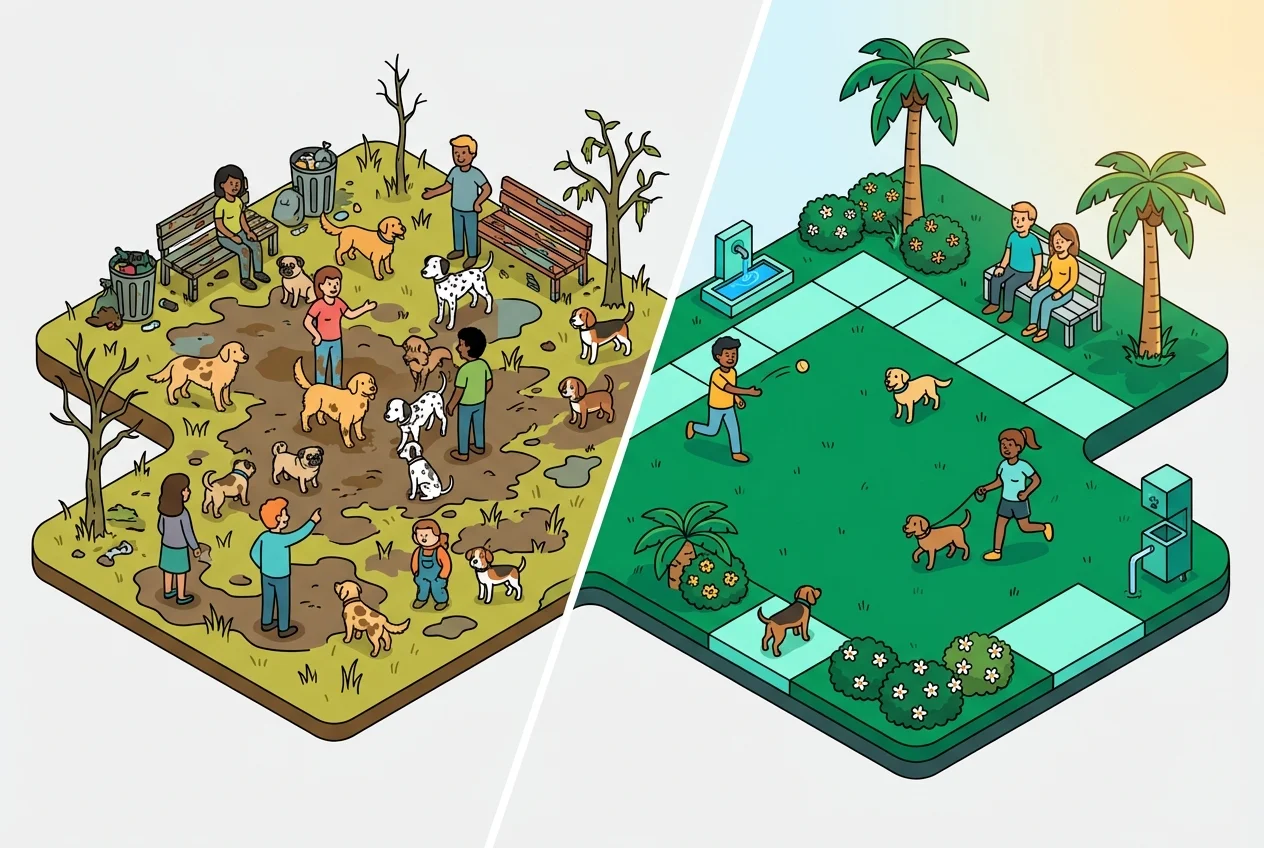
Beyond immediate safety, the long-term impact on park infrastructure is substantial. Fencing, gates, water stations, and seating areas endure accelerated wear and tear from concentrated traffic. What might last for years under balanced usage can degrade in months under constant strain. Environmentally, the effects are equally severe. Rapid turf erosion, soil compaction, and challenges in waste management become chronic issues. A healthy patch of grass can quickly turn into a muddy, barren wasteland, making the park less appealing and more costly to maintain.
Beyond the Pack Mentality: Understanding Aggression Triggers in Crowded Spaces
Dog parks, while designed for socialization, can become breeding grounds for conflict when overcrowded. Many owners, especially those new to dog parks, may overlook or misinterpret common canine stress signals and body language. A tucked tail, lip licking, yawning, or turning away are often early indicators of discomfort that go unnoticed in the chaos of a busy park.
"In a crowded dog park, the natural cues dogs use to communicate are often drowned out. This sensory overload, combined with limited escape routes, can push even well-socialized dogs past their tolerance threshold, leading to preventable conflicts."
High dog-to-human ratios and confined spaces amplify natural canine behaviors such as territoriality and resource guarding (of toys, water, or even their human). The constant stream of new dogs entering and exiting can also lead to overstimulation, making it difficult for dogs to de-escalate. Owner anxiety, often heightened in stressful environments, can inadvertently contribute to incidents, as can a lack of diligent supervision. A single reactive dog can trigger a 'domino effect,' quickly escalating a tense situation into a full-blown altercation. This underscores a critical point: many incidents are preventable with proactive space and crowd management, rather than solely relying on reactive measures once aggression has already begun. Understanding these triggers is the first step towards creating safer, more harmonious environments. For more insights on canine behavior in shared spaces, consider our related guide.
The Amenivue Solution: Leveraging Real-Time Visibility to Nudge Behavior
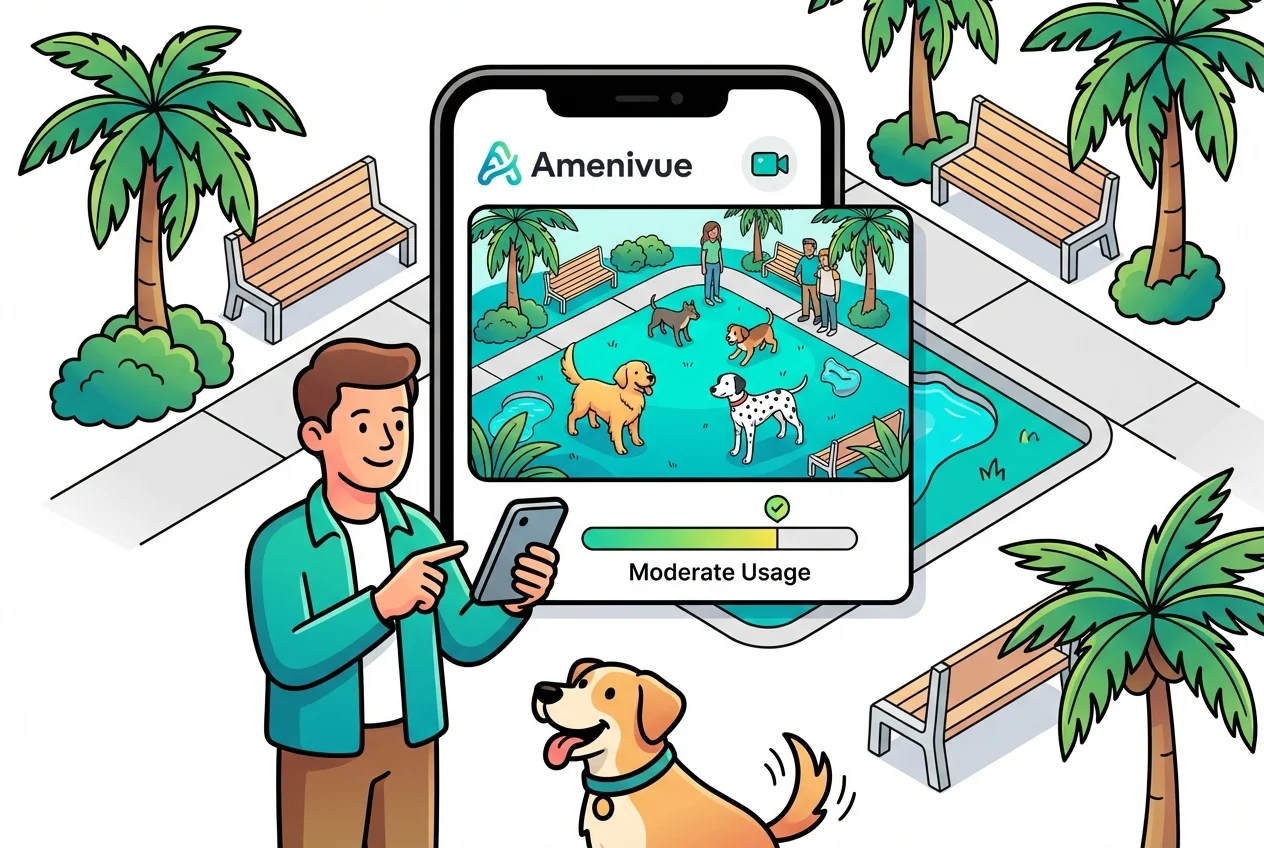
Imagine if dog owners could know the 'vibe' of the park before they even left home. This is precisely what Amenivue offers. Our platform provides live camera feeds and real-time usage status updates (e.g., 'Crowded', 'Moderate', 'Quiet') for dog parks directly to residents' smartphones. This isn't about surveillance; it's about transparency and empowerment.
This real-time data empowers dog owners to make informed decisions. Instead of arriving at a packed park and being forced to leave or endure a stressful visit, they can choose less busy times. This concept, known as 'behavioral nudging,' subtly shifts user patterns without enforcing strict rules or limiting access. By providing transparent, immediate information, Amenivue guides users towards optimal usage times, naturally spreading out demand. Community surveys revealed that up to 40% of planned dog park visits were either cut short or abandoned due to perceived overcrowding upon arrival before implementing real-time visibility. Amenivue eliminates this frustration.
The benefits of this approach are profound. Spreading out demand significantly reduces stress for both dogs and owners, promoting safer and more positive interactions. It transforms the overall park experience from a potential source of anxiety into a consistently enjoyable outing for the entire community. This proactive management also helps reduce wasted trips by providing real-time status updates.
Sustainable Parks: Preserving Turf, Infrastructure, and Community Morale
Beyond immediate safety, the strategic distribution of paw traffic through real-time visibility has significant long-term benefits for the park itself. Environmentally, reducing concentrated usage means less soil compaction and erosion, allowing turf to recover and thrive. Healthier turf naturally leads to improved waste absorption and a more pleasant environment for everyone.
Spreading usage also significantly reduces wear and tear on physical amenities. Fencing, gates, benches, and water fountains last longer, deferring costly repairs and replacements. This translates directly into economic advantages for park management: lower routine maintenance expenses, fewer emergency repairs, and optimized resource allocation. Park planners can better justify budgets when they can demonstrate efficient resource use and extended asset lifespans.
By flattening peak usage curves, communities can achieve a virtuous cycle: safer parks lead to happier users, who in turn help maintain the park's condition, reducing costs and fostering greater community pride.
Improved community relations are another invaluable outcome. Fewer complaints about muddy, barren patches, broken equipment, or overcrowded conditions foster increased pride in well-maintained spaces. Residents see their amenities being cared for and utilized effectively, leading to a more positive perception of park management and community leadership. This visual transparency can even validate budget increases by showing residents the direct value of their contributions.
Empowering the Community: Education and Engagement for Success
Implementing real-time visibility is only half the battle; ensuring widespread awareness and adoption of the Amenivue platform among dog owners and residents is key to success. Effective communication strategies are vital. This includes prominent, clear signage at all park entrances, detailed announcements in community newsletters, integration into HOA portals, and targeted social media campaigns. Highlighting the benefits, such as reducing waiting times and ensuring a safer environment, will resonate with users.
Promote Visibility
Install clear signage at park entrances and within community hubs, directing users to the Amenivue app or website. Make it obvious how to access real-time park status.
Educate & Engage
Use community newsletters, social media, and HOA meetings to explain the benefits of checking Amenivue before visiting. Emphasize how it enhances safety and enjoyment for everyone.
Share Success Stories
Feature testimonials from residents who have experienced improved dog park visits thanks to Amenivue. Seeing positive outcomes encourages wider adoption and builds trust in the system.
The goal is to encourage a 'check before you go' culture, making the Amenivue app an essential part of a dog owner's routine before heading to the park. Sharing success stories and positive user testimonials can build trust, reinforce the tangible benefits, and drive sustained engagement. When residents see that their community is actively working to enhance their experience, they are more likely to participate and support the initiative.
Frequently Asked Questions
How does Amenivue ensure privacy with live camera feeds?
Amenivue focuses solely on public amenity spaces, not private areas. Our cameras are strategically placed to show general usage and activity levels, similar to a public webcam. We do not use facial recognition or record personal data, ensuring privacy while providing valuable real-time information about amenity availability.
Is Amenivue difficult for residents to use?
Not at all. The Amenivue platform is designed with user-friendliness in mind. Residents can access live feeds and status updates through a simple web interface or a dedicated mobile app, making it incredibly easy to check park conditions before heading out.
What if our dog park doesn't have good internet connectivity for cameras?
Amenivue offers flexible solutions for various connectivity challenges. Our team can assess your specific park's infrastructure and recommend appropriate camera and network solutions, including cellular-based options, to ensure reliable real-time feeds even in areas with limited existing internet access.
How do we measure the success of Amenivue in reducing overcrowding?
Success can be measured through several key indicators: a noticeable reduction in peak hour density, an increase in off-peak usage, fewer reported dog-related incidents, improved turf health, and positive feedback from residents regarding their park experience. Amenivue can also provide usage analytics to help track these trends over time.
Can Amenivue be used for other community amenities besides dog parks?
Absolutely! While this article focuses on dog parks, Amenivue is a versatile platform perfect for any shared community amenity. It can provide real-time visibility for pools, fitness centers, tennis courts, laundry rooms, and more, helping to manage usage and improve member satisfaction across the board.
Conclusion: A Smarter, Safer Future for Urban Dog Parks
Integrating real-time visibility into urban dog park management offers a holistic solution to the pervasive problem of overcrowding. By empowering dog owners with the information they need to make informed decisions, communities can achieve enhanced safety, improved sustainability of park infrastructure and environment, and elevated community satisfaction. Amenivue provides a proactive, scalable, and cost-effective solution to the complex challenges of urban dog park overcrowding, ensuring these vital spaces remain vibrant, safe, and sustainable for all.
Ready to transform your community's dog park experience? Discover Amenivue and learn how real-time visibility can benefit your urban spaces.