The fitness industry is buzzing with predictions for 2026, often centered around sophisticated AI, predictive models, and the elusive concept of 'Digital Twins' to revolutionize gym management. While these innovations promise a glimpse into the future, they frequently fall short on delivering immediate, actionable utility for both gym operators and their members. The reality is, the most impactful solutions are often the most straightforward. This article will argue that simple, real-time visual occupancy data offers a superior, frictionless alternative, providing immediate truth that enhances member experience and operational efficiency more effectively than complex, often speculative, predictions.

The Allure of the 'Digital Twin' & Predictive AI in Fitness
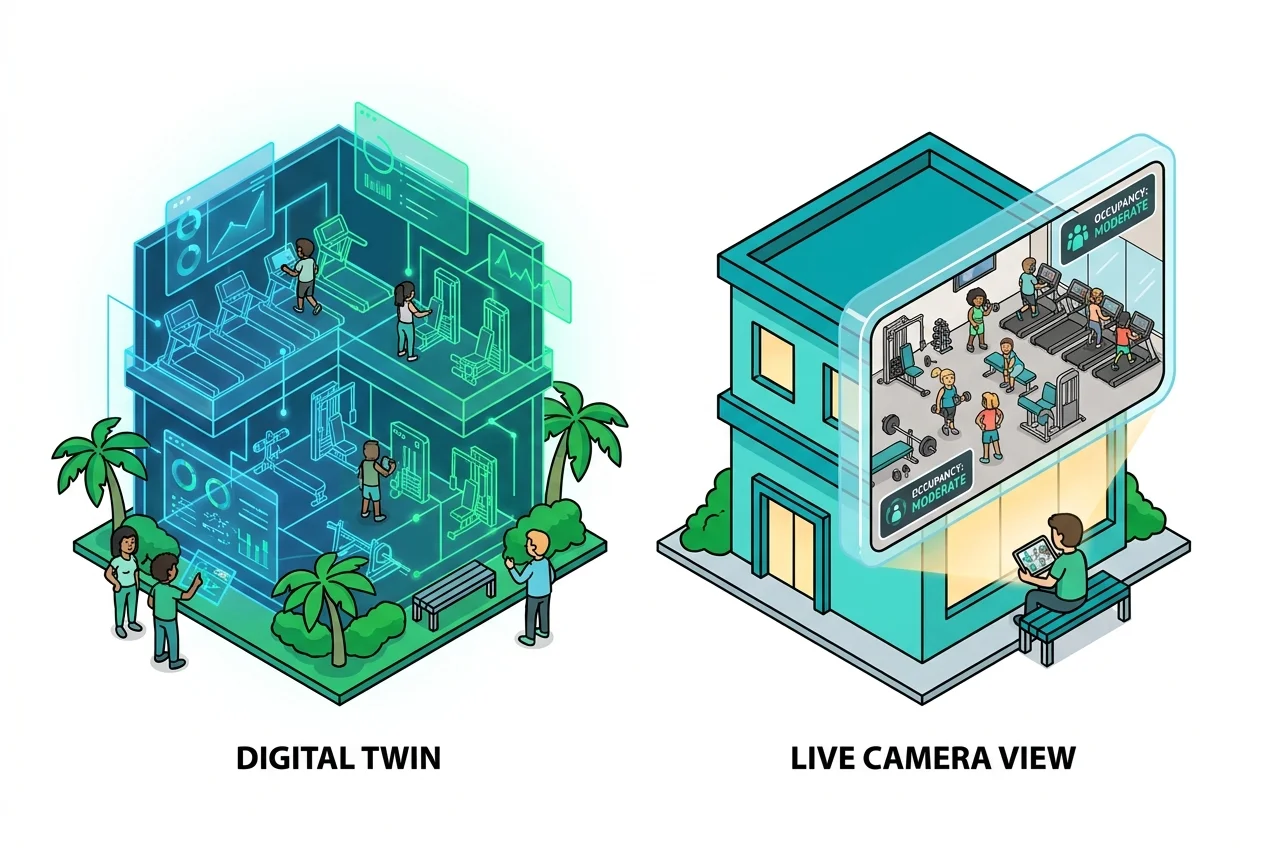
The concept of a 'Digital Twin' in a gym context refers to a virtual replica of your physical facility, constantly updated with data to simulate layouts, predict equipment wear, and even forecast member traffic. Predictive AI, often integrated with gym management software 2026, takes historical data – check-ins, class attendance, equipment usage – to anticipate peak times, staffing needs, and resource allocation. The theoretical benefits are compelling: optimized resource deployment, personalized member experiences, and proactive maintenance. Imagine a system that tells you the optimal time to schedule a cleaning crew or when to order new dumbbells based on predicted usage patterns.
Did You Know?
The global market for Digital Twin technology is projected to reach over $100 billion by 2030, with applications spanning manufacturing, healthcare, and increasingly, smart buildings and fitness facilities. While promising, its effectiveness in dynamic, human-centric environments like gyms often faces practical hurdles.
However, the inherent limitations of these advanced fitness tech trends cannot be overlooked. Predictive models are, by definition, reliant on past data. They struggle to account for real-time anomalies: a sudden equipment breakdown, an unexpected weather change driving more people indoors, or a local event that empties the gym. The 'digital twin fitness' model, while sophisticated, can only be as accurate as the data fed into it, and real-world variables often introduce significant discrepancies.
Predictive vs. Actual: The Cost of Guessing Gym Traffic
Relying solely on predictive models can lead to significant pitfalls that erode member satisfaction and operational efficiency. Imagine a member checking their app, seeing a prediction that the gym will be quiet, only to arrive and find every treadmill occupied and the weight room overflowing. This creates frustration, wasted trips, and ultimately, a negative perception of your facility. A recent industry survey indicated that over 60% of gym members would visit their facility more often if they could reliably check real-time occupancy before leaving home, highlighting the gap between prediction and actual need.
The impact on member retention can be severe. If members repeatedly experience inaccurate predictions, they lose trust and may seek alternatives. From an operational standpoint, misjudging traffic leads to misallocated staff, uncleaned equipment during peak times, and missed revenue opportunities if popular classes are under-scheduled due to inaccurate forecasts. The fundamental difference lies between 'what should be' according to an algorithm and 'what is' happening in reality. This discrepancy is where real-time visual data shines, offering an undeniable, immediate truth that no prediction can match.
Frictionless Fitness: What Members Truly Want
At the heart of member satisfaction lies simplicity, immediacy, and convenience. When a member is planning their workout, their primary question isn't "What was the average occupancy at 5 PM last Tuesday?" but rather, "Is the squat rack free now?" or "How busy are the cardio machines right this second?" Complex app features that require navigating multiple menus or interpreting abstract data often go unused. Members want to open an app, glance at a clear visual, and instantly know the current state of their desired amenity.
"In the age of instant gratification, predictive models often feel like an educated guess. Members want certainty, and real-time visual access delivers exactly that, reducing anxiety and maximizing their workout efficiency."
Real-time visual access to gym occupancy significantly reduces anxiety and prevents wasted trips to an overcrowded facility. It empowers members to time their visits better, ensuring a more optimal and enjoyable experience. This also contributes to 'fair access,' allowing all members the opportunity to utilize popular equipment or quiet zones when they are available, rather than constantly battling peak crowds. This frictionless approach fosters a sense of control and convenience, directly translating into higher member satisfaction and loyalty.

Empowering Staff & Optimizing Operations with Live Visibility
Beyond member satisfaction, real-time visual occupancy data profoundly impacts staff efficiency and overall operational excellence. Front desk staff can spend up to 20% of their time during peak hours answering calls about how busy the gym is. With live views, this inquiry volume drops dramatically, freeing staff to focus on member engagement, sales, and other critical tasks.
Operational Benefits of Live Visuals
- Reduces front desk calls about gym busyness
- Enables proactive staffing adjustments
- Optimizes cleaning and maintenance schedules
- Supports data-driven facility improvements
- Enhances oversight for safety and security
Live visibility enables proactive management. Staff can see when a particular area is getting busy and deploy resources accordingly, whether it's opening another check-in station, having a trainer on standby, or initiating a cleaning cycle in a less-used zone. This real-time information facilitates data-driven decisions for facility layout adjustments, class scheduling based on actual demand, and more informed equipment purchasing. Furthermore, it provides improved oversight for safety and security, allowing staff to quickly identify potential issues or areas needing attention without being intrusive. For other facilities, real-time visual solutions can also help streamline logistics and improve overall efficiency.
Implementing Real-Time Visuals: Transparency, Not Surveillance
A common concern when discussing live camera feeds is the perception of 'Big Brother' surveillance. It's crucial to emphasize that real-time visual occupancy solutions are designed for transparency and utility, not individual identification. The focus is purely on aggregate occupancy levels and equipment availability. This often involves using privacy-focused technology that might blur faces, provide general heatmaps, or count individuals without storing identifiable data. The goal is to show "how many people are in the weight room," not "who is in the weight room."
Pro Tip
To ensure transparent implementation, clearly communicate the benefits to your members (convenience, fair access, better experience). Display clear signage indicating the presence of amenity viewing cameras and explain their purpose. Focus on how this technology serves them, not how it monitors them.
Best practices for implementation include clear signage, a strong communication strategy highlighting the benefits to members (convenience, fair access, improved experience), and selecting technology specifically designed for amenity viewing rather than security. These systems use simple camera feeds to provide a snapshot of current conditions, enabling members to make informed decisions. This approach aligns with modern expectations for digital tools that empower users while respecting privacy, much like visual oversight can aid community pool management.

Conclusion
While the allure of AI, predictive models, and 'Digital Twins' in fitness tech for 2026 is undeniable, their complexity often overshadows their immediate, actionable utility. Real-time visual occupancy solutions cut through the noise, offering immediate, undeniable truth that empowers both members and staff. By providing frictionless access to current amenity conditions, gyms can significantly enhance member convenience, ensure fair access, and drastically improve operational efficiency by reducing front desk calls and enabling proactive management. For an immediate, tangible impact on your gym's operations and member satisfaction, real-time visual solutions are the clear choice for 2026 and beyond.
Frequently Asked Questions
What is the difference between predictive AI and real-time visual occupancy for gyms?
Predictive AI uses historical data to forecast future gym usage patterns, offering educated guesses about peak times or equipment availability. Real-time visual occupancy, on the other hand, provides immediate, live views of current conditions in the gym, showing exactly how busy areas or specific equipment are right now.
How do real-time visuals improve member satisfaction?
Members gain the ability to check the current busyness of the gym before they leave home, preventing wasted trips to an overcrowded facility. This reduces frustration, allows them to plan their workouts more effectively, and ensures a more convenient and enjoyable experience, ultimately leading to higher satisfaction and retention.
Does real-time occupancy monitoring raise privacy concerns?
Reputable real-time visual occupancy solutions are designed with privacy in mind. They typically focus on aggregate occupancy levels and equipment availability rather than individual identification. This can involve using blurred visuals, heatmaps, or counting technology that doesn't store identifiable data, ensuring transparency without surveillance.
Can real-time visual data help with gym staffing and operations?
Absolutely. Live visibility allows gym management to proactively adjust staffing levels based on actual demand, optimize cleaning schedules, and make informed decisions about equipment maintenance or facility layout changes. It also significantly reduces the volume of front desk calls asking about gym busyness, freeing staff for other critical tasks.
Is implementing real-time visuals difficult or expensive?
Modern real-time visual solutions are often designed for straightforward implementation and integration with existing systems. They typically involve privacy-focused camera feeds and user-friendly dashboards or apps, making them a cost-effective way to achieve immediate operational improvements and boost member experience.
Ready to transform your gym's operations and enhance member satisfaction with immediate, actionable insights? See our platform in action and discover how Amenivue can bring real-time transparency to your fitness facility.