The projected 2026 lifeguard shortage looms large, threatening to turn community pools from cherished amenities into operational liabilities for HOA boards and property managers. With rising insurance premiums and an already stretched workforce, maintaining safe, compliant, and accessible aquatic facilities is becoming an increasingly complex challenge. This isn't just about finding staff; it's about navigating a national crisis that impacts everything from resident satisfaction to your HOA's bottom line. Fortunately, a proactive, data-driven approach leveraging real-time visual oversight offers a powerful solution, enhancing safety, ensuring fair access, and fortifying compliance even in the face of staffing difficulties.

The Looming Crisis: Understanding the 2026 Lifeguard Shortage & Its Impact on HOAs
The aquatic industry is bracing for a significant workforce challenge, with projections indicating a severe lifeguard shortage by 2026. This isn't a new phenomenon; the American Lifeguard Association reported that nearly one-third of public pools in the U.S. faced staffing issues in recent years, a trend exacerbated by factors like reduced training programs during the pandemic and shifting labor market dynamics. For HOA communities, these national trends translate into direct, tangible consequences.
Reduced operational hours, forced closures, and an increased risk of incidents during unstaffed periods are becoming unfortunate realities. Without adequate supervision, HOAs face heightened potential for accidents, injuries, and a corresponding surge in legal liabilities. This environment puts immense pressure on HOA boards and property managers to meet stringent safety and compliance requirements, often leading to skyrocketing insurance premiums. Some insurers are even imposing stricter conditions or refusing coverage altogether for pools without constant, certified supervision. The financial strain of maintaining a desirable amenity can quickly outweigh its benefits if not managed proactively.
Did You Know?
The cost of pool liability insurance for HOAs has seen significant increases, with some communities reporting premium hikes of 20-50% in recent years due to heightened risk assessments and a shrinking pool of insurers willing to cover unstaffed or under-supervised facilities.

Beyond Fobs: Why Real-Time Visual Oversight is Essential for Pool Safety & Rules Enforcement
Traditional access control systems like fobs and keycards are a good first step, but they have inherent limitations. While they verify who enters the pool area, they offer no insight into what happens next. They can't tell you if the pool is overcrowded, if rules are being broken, or if someone needs assistance. This gap in awareness is particularly critical during periods when a certified lifeguard isn't on duty, which will become more common with the impending shortage.
This is where real-time visual oversight becomes indispensable. Live camera feeds provide property managers and designated staff with immediate, situational awareness of pool activity and conditions. From a central dashboard, you can remotely monitor capacity levels, observe behavior, and identify potential issues as they unfold. This capability allows for proactive rule enforcement – spotting glass containers, identifying unattended minors, or addressing horseplay – without the need for constant physical presence. It transforms your ability to manage the pool environment, ensuring a safer space for all residents even when traditional staffing is limited. For more insights on managing unstaffed amenities, check out our related guide.
Benefits of Visual Pool Oversight
- Real-time capacity monitoring
- Proactive rule enforcement
- Enhanced safety during unstaffed hours
- Reduced liability exposure
- Data-driven operational insights
Smarter Staffing: Optimizing Roaming Patrols with Data-Driven Visuals
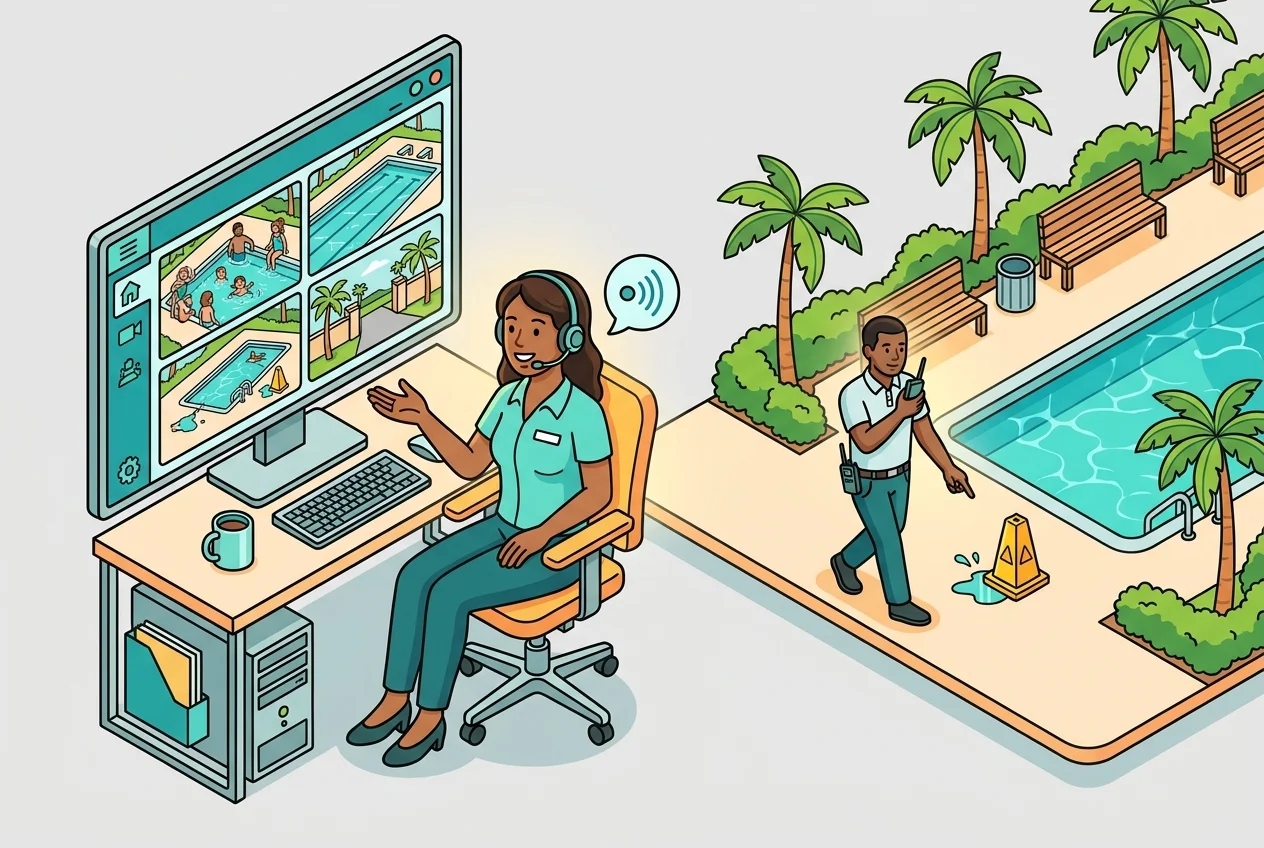
The traditional model of undirected roaming security or pool monitors is often inefficient and costly. Staff may spend valuable time patrolling empty areas or arrive too late to address an issue, leading to wasted resources and missed opportunities to intervene. In an era of staffing challenges and budget constraints, every minute and every dollar counts.
Visual oversight platforms like Amenivue revolutionize this approach by transforming security and maintenance personnel into highly efficient, responsive teams. Property managers or designated staff can monitor multiple pool areas simultaneously from a single interface. If an overcrowding alert is triggered, a rule violation is observed (e.g., someone bringing glass bottles onto the deck), or a potential incident is detected, staff can be dispatched precisely when and where they are needed. This targeted response capability ensures that resources are allocated efficiently, reducing unnecessary patrol time by up to 40% and enhancing the effectiveness of existing personnel. It's about working smarter, not just harder, to maintain safety and order.
Fortifying Your HOA: Visual Documentation for Insurance & Liability Compliance
In the unfortunate event of an incident, detailed and irrefutable documentation is paramount. Amenivue's visual oversight platform provides timestamped video records that are invaluable for incident investigation, substantiating insurance claims, and mounting a robust liability defense. These records serve as an objective account of events, offering clarity and reducing disputes.
By continuously monitoring and documenting pool activity, HOAs can demonstrate proactive due diligence to insurance providers, showcasing their commitment to safety and compliance. This includes visual verification of capacity limits, adherence to safety protocols (like "no running" or "no diving" rules), and timely responses to observed issues. Such comprehensive documentation can mitigate risks, potentially leading to more favorable insurance rates or terms by presenting a clear picture of responsible management. In an industry where liability claims can be costly and complex, visual evidence provides an irrefutable layer of protection. Learn more about how visual data can help with visual verification.
Timestamped visual records from live camera feeds provide undeniable evidence for incident investigation, insurance claims, and liability defense, significantly strengthening an HOA's position.

Transparent Communication: Preparing Residents for the New Era of Pool Management
Introducing visual oversight requires clear and transparent communication with residents. Frame the implementation as a positive step towards enhanced safety, fair access, and improved operational efficiency, especially in light of the lifeguard shortage. Start with an announcement explaining the "why" – the challenges of staffing, rising costs, and the need for modern solutions to keep the pool open and safe.
Highlight the direct benefits for residents: quicker response times to issues, better managed capacity to prevent overcrowding, and a consistently safer environment even with reduced lifeguard presence. Emphasize that the goal is to maintain a high-quality amenity for everyone. Address potential privacy concerns head-on by clearly stating the system's purpose (amenity management, not security surveillance), outlining data retention policies, and confirming compliance with all relevant privacy regulations. Engaging residents early and openly fosters trust and ensures a smoother transition to this new era of pool management. For insights on managing public spaces with transparency, explore our post on real-time transparency.
Communication Best Practice
Host a town hall or send out a detailed FAQ document explaining the new visual oversight system. Focus on how it benefits residents by ensuring their pool remains open, safe, and fair for all users, especially during unstaffed hours.
Conclusion
The impending 2026 lifeguard shortage, coupled with rising operational costs and liability concerns, presents a formidable challenge for HOA pool management. Traditional methods are no longer sufficient to ensure safety, compliance, and resident satisfaction. Amenivue's real-time visual oversight platform offers a modern, efficient, and compliant solution, empowering HOAs to navigate these complex problems with confidence. By providing invaluable situational awareness, optimizing staff deployment, and generating irrefutable visual documentation, Amenivue helps secure, manage, and optimize your community pool operations, ensuring it remains a vibrant and safe amenity for years to come.
Frequently Asked Questions
How does Amenivue help with the lifeguard shortage?
Amenivue provides real-time visual monitoring of your pool area, allowing property managers or designated staff to oversee activity, manage capacity, and enforce rules remotely. This capability helps maintain safety and compliance during periods when a certified lifeguard may not be present, reducing reliance on constant physical supervision.
Is visual oversight a replacement for lifeguards?
No, Amenivue is not intended to replace certified lifeguards where they are legally required. Instead, it serves as a powerful supplementary tool to enhance safety, manage operational efficiency, and ensure compliance, particularly during unstaffed hours or in situations where traditional lifeguard coverage is difficult to secure.
How does Amenivue help with insurance compliance?
Amenivue generates timestamped visual records of pool activity, providing irrefutable documentation for incident investigations, insurance claims, and demonstrating due diligence. This visual evidence helps HOAs meet compliance requirements, mitigate risks, and potentially secure more favorable insurance terms by showcasing proactive management.
What about resident privacy concerns?
Amenivue is designed for amenity management, not personal surveillance. We recommend clear communication with residents about the system's purpose, data retention policies, and adherence to privacy regulations. The focus is on pool safety, capacity management, and rule enforcement in common areas, not individual privacy intrusion.
Can Amenivue reduce operational costs?
Yes, by enabling more efficient deployment of roaming staff and providing data-driven insights into pool usage, Amenivue can significantly reduce unnecessary patrol time and optimize resource allocation. This leads to substantial cost savings in staffing and operational overhead.
Ready to transform your HOA pool management? Schedule a demo today to see how Amenivue can provide a proactive, data-driven approach to secure, manage, and optimize your community's aquatic facilities.