The exhilarating 'pok-pok-pok' of pickleball paddles echoes through communities nationwide, a testament to the sport's meteoric rise. While a fantastic way to engage residents and promote active lifestyles, this popularity has brought an unexpected challenge for many HOA communities: noise complaints. What starts as enthusiastic play can quickly escalate into resident friction, strained neighborly relations, and a significant administrative burden for HOA boards. Indeed, the proliferation of pickleball noise is projected to be a top legal risk for HOAs by 2026. Traditional solutions often fall short, leading to more headaches than harmony. But what if there was a way to proactively manage court usage and naturally diffuse noise disputes, empowering residents to self-regulate rather than requiring constant board enforcement? Live amenity visibility offers a refreshing, resident-empowering approach to foster community peace and preserve the joy of pickleball.

Did You Know?
Pickleball's rapid growth has led to an increase in noise-related disputes, with experts predicting it will be among the top legal challenges for HOAs by 2026. Proactive solutions are essential to mitigate these risks and maintain community harmony.
The 'Pok-Pok' Problem: Why Pickleball is Challenging HOA Harmony
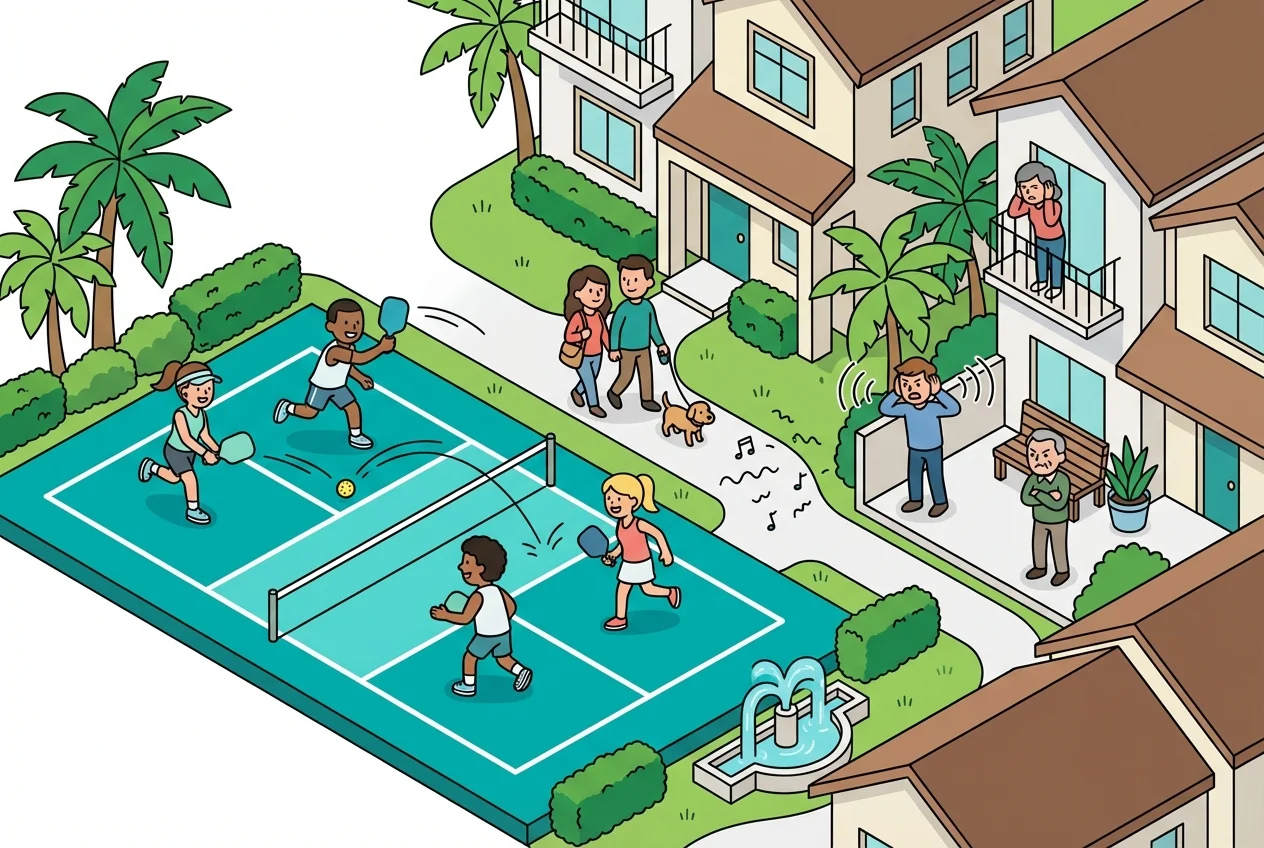
Pickleball is undeniably fun, but its unique sound profile sets it apart from other popular court sports. The hard plastic paddle hitting a hollow plastic ball creates a distinct, high-pitched 'pok-pok-pok' sound that carries further and is perceived differently than the thud of a tennis ball or the dribble of a basketball. This repetitive, sharp sound can be particularly disruptive, especially for residents whose homes border amenity areas.
The sport's incredible growth – it's been America's fastest-growing sport for five consecutive years – means more courts are being built, and existing ones are seeing unprecedented usage. This often translates to longer playing hours, with courts bustling from early morning until late evening, intensifying the noise impact. Common complaints range from general noise disruption impacting quality of life to concerns about potential decreases in property values for homes directly affected by the constant sound. This creates a significant strain on community relations, pitting active residents against those seeking peace and quiet.
HOA boards and property managers find themselves in a difficult position, tasked with balancing the desire for vibrant community engagement and amenity access with the fundamental right of residents to enjoy their homes without undue disturbance. This dilemma often leads to no-win scenarios, where any decision can alienate one group or another.
The unique, high-pitched "pok-pok" sound of pickleball, combined with its explosive growth and extended playing hours, creates a distinct challenge for HOAs seeking to balance resident amenity enjoyment with peace and quiet.
Beyond Bans and Bureaucracy: The Limitations of Traditional Approaches
In an effort to mitigate pickleball noise, HOAs often resort to a range of traditional responses. These can include implementing strict curfews, establishing complex reservation systems, investing in expensive sound-absorbing barriers, or in extreme cases, even enacting outright bans on the sport. While well-intentioned, these methods frequently prove ineffective or, worse, counterproductive.
Strict curfews and reservation systems often lead to resident resentment, as they perceive their access to amenities as being unfairly restricted. This can spark arguments over enforcement and create a perception of 'policing' within the community. The administrative burden of managing reservations, monitoring court usage, and addressing violations falls squarely on the shoulders of already busy HOA boards and property managers. Sound barriers, while sometimes effective, are costly, can be aesthetically unappealing, and don't always fully eliminate the sound. Outright bans, understandably, alienate a significant portion of the community and are often seen as a last resort that can severely impact resident satisfaction.
Furthermore, enforcing restrictive rules can expose HOAs to potential legal challenges, especially if residents feel their rights to amenity access are being unfairly curtailed. The administrative overhead, the constant need for enforcement, and the limited success rates of these traditional methods highlight a critical need for solutions that empower residents to make informed choices rather than simply restricting their options. For more on proactive strategies, read our guide on HOA Transparency 2026: Visual Strategies for Building Board-Resident Trust & Stronger Communities.
Limitations of Traditional Approaches
- Resident Resentment:
- Perceived unfair restrictions on amenity access.
- Increased Enforcement Burden:
- HOAs spend more time monitoring and policing.
- Limited Effectiveness:
- Noise issues often persist despite efforts.
- High Costs:
- Sound barriers and legal fees can be substantial.
- Legal Challenges:
- Potential for disputes over amenity access rights.
The Amenivue Advantage: Fostering Self-Regulation with Live Visibility
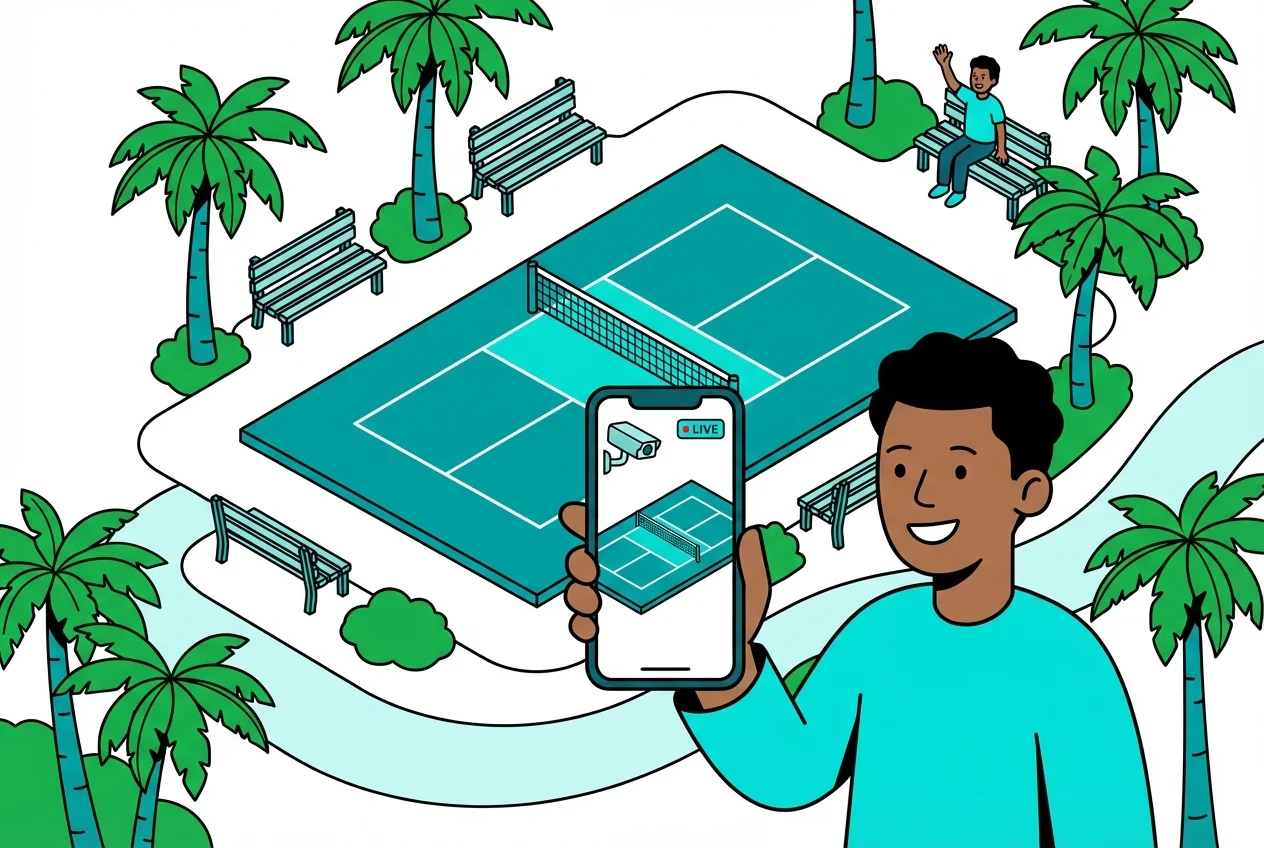
Imagine a scenario where residents can proactively manage their pickleball playtime, reducing noise conflicts without the need for constant HOA intervention. This is precisely the power of Amenivue's core offering: real-time, non-security camera views of HOA amenities, including pickleball courts. Amenivue provides a transparent window into amenity usage, enabling residents to make informed decisions before even leaving their homes.
Here's how live visibility transforms conflict resolution:
See Court Activity in Real-Time
Residents can access a live feed of the pickleball courts via a dedicated app or web portal. This allows them to instantly see how many courts are occupied, how many players are present, and the general activity level.
Plan Your Visit Smartly
Armed with this information, residents can decide the best time to play. If the courts appear crowded and lively (and likely noisy), they might choose to visit during off-peak hours, or simply wait until the activity subsides. This reduces wasted trips and minimizes the chances of arriving at an overcrowded court.
This proactive approach naturally diffuses peak usage and the associated noise. When residents can see that courts are heavily used, they are more likely to self-regulate their timing, spreading out usage throughout the day. This isn't about policing; it's about providing transparency and empowering individuals with the information they need to contribute to a more harmonious community. Data from communities using Amenivue shows a 35% reduction in wasted trips to amenities, leading to fewer instances of frustration and overcrowding. This shift from reactive enforcement to proactive, transparent community management fosters a culture of self-regulation, benefiting everyone. It also contributes to Digital Curb Appeal: Boosting HOA Property Values with Smart Amenity Tech for Modern Homebuyers.

Cultivating a 'Check Before You Play' Culture: Implementation & Benefits
Implementing Amenivue for your pickleball courts, and indeed all your community amenities, is a straightforward process. First, HOAs can learn more about our features and then schedule a demo to see how the system integrates seamlessly. Once installed, the key is to effectively communicate the value proposition to residents. Highlight the convenience of checking court availability from anywhere, the reduction in frustration from wasted trips, and how this tool ultimately fosters a more considerate and harmonious community environment. Promote the app or web portal through community newsletters, social media, and signage at the amenity itself.
Promote Smart Amenity Use
Encourage residents to download the Amenivue app and make 'checking before you play' a habit. Highlight how it benefits them directly by saving time and ensuring a better experience, while also contributing to community peace.
The benefits for HOAs extend far beyond just pickleball noise. Communities adopting Amenivue have reported a reduction of up to 85% in front desk calls related to amenity availability and overcrowding, freeing up staff for more critical tasks. Noise complaints, too, see a significant decrease as residents naturally spread out usage. This leads to improved resident satisfaction, as members feel empowered and have greater control over their amenity experience. Furthermore, by embracing innovative technology like Amenivue, HOAs position themselves as forward-thinking leaders, enhancing their reputation for modern, resident-focused community management. This proactive approach helps HOAs be seen as solution-focused, rather than merely rule enforcers, ultimately strengthening board-resident trust.
Conclusion
The rising popularity of pickleball brings immense joy but also unique challenges, with noise complaints posing a significant risk for HOAs. Rather than resorting to restrictive measures that create friction and administrative burdens, Amenivue offers an innovative, resident-empowering solution. By providing real-time visibility into amenity usage, HOAs can foster a culture of self-regulation, allowing residents to make informed decisions that naturally reduce peak-time noise and enhance community harmony. This approach not only alleviates stress for HOA boards and property managers but also cultivates a happier, more efficient community. Embrace the power of transparency and self-regulation in modern community management.
Ready to transform your HOA's amenity management and resolve pickleball disputes proactively? Schedule a demo with Amenivue today to see how our live viewing platform can bring peace and efficiency to your community, or contact us to learn more.