The arrival of spring and summer brings renewed vibrancy to HOA communities, but for many, it also heralds the annual headache of amenity monopolization – famously known as the 'chair hog' or 'towel game.' This persistent issue, where residents "reserve" prime pool chairs or other amenity spots with personal items for extended periods without actual presence, fuels resident frustration and places an undue burden on community management. Traditional solutions, from rigid booking systems to increased staff monitoring, often fall short, failing to address the real-time discrepancy between what's "reserved" and what's genuinely "in use." This article introduces live amenity viewing as a modern, effective tool to foster self-policing, transparency, and fairness, transforming how communities manage their most cherished shared spaces.

The 'Towel Game' Headache: Why Booking Software Isn't Enough
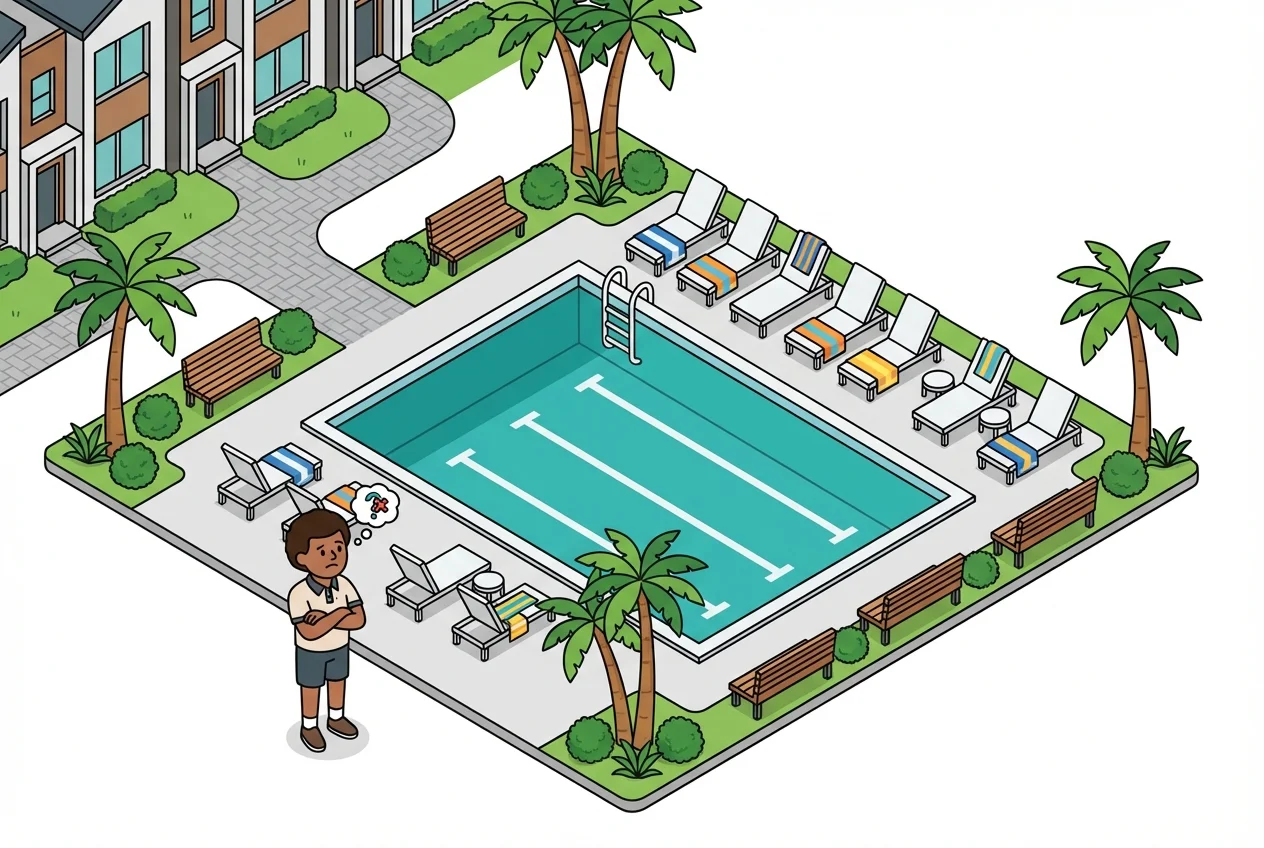
The 'towel game' is a familiar scenario in many HOA communities: a resident places a towel, book, or bag on a prime poolside lounge chair early in the morning, effectively "reserving" it. They then disappear for hours, returning only sporadically or not at all, while other residents arrive to find all desirable spots seemingly taken, yet visibly empty. This practice creates a perception of unfairness and exclusivity, leading to widespread complaints.
Existing solutions often struggle to curb this behavior effectively. Booking software, while useful for scheduling access to facilities like tennis courts or fitness rooms, doesn't account for real-time occupancy. A resident might book a time slot for the gym but then not show up, or "reserve" a pool slot and only use it partially, leaving equipment or chairs empty but technically unavailable. Similarly, staff monitoring is resource-intensive; property managers or HOA board members cannot realistically patrol amenities all day to enforce rules, especially during peak seasons. A recent survey indicated that over 80% of resident complaints to HOA boards during summer months are related to amenity access and perceived unfairness in usage. This constant policing drains valuable resources and can strain relationships between management and residents.
Traditional amenity management tools, including booking systems and staff oversight, often fail to solve the 'towel game' because they lack real-time visibility into actual usage versus theoretical availability.
The impact on community harmony is significant. Residents feel cheated, leading to resentment and a breakdown of trust. For HOAs, this means an increase in front desk calls, emails, and direct confrontations that divert attention from more impactful community initiatives. It's a lose-lose situation that diminishes the quality of life for everyone. For insights into modern resident expectations, consider reading about digital transformations.
Visual Verification: Bridging the Gap Between 'Reserved' and 'In Use'
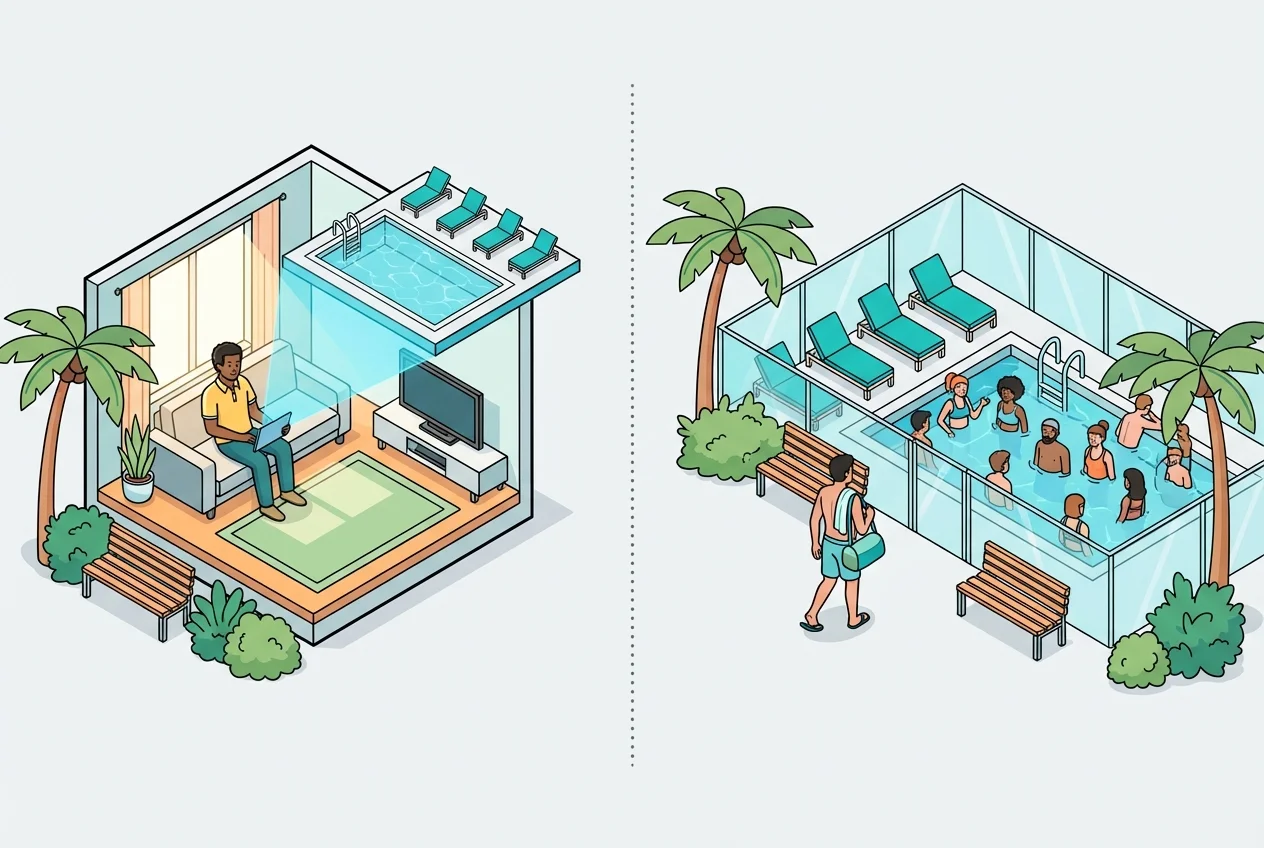
Live camera feeds offer a revolutionary solution by providing undeniable, real-time proof of amenity availability and actual usage. Amenivue's platform streams live, non-recorded views of common areas like pools, fitness centers, and sports courts directly to residents' devices. This immediate visual data eliminates the ambiguity that fuels the 'towel game'.
The critical distinction is simple: residents can see if a 'reserved' chair is truly occupied by a person or merely 'towel-hogged.' Before leaving their home, a resident can quickly check the Amenivue app and know definitively whether there are open chairs by the pool, available treadmills in the gym, or an empty pickleball court. This empowers them to make informed decisions, preventing wasted trips and managing their expectations. Imagine the relief of knowing exactly what to expect before you even step out the door.
"Before Amenivue, we spent countless hours mediating pool chair disputes. Now, residents check the live feed, and issues have practically disappeared. It's transformed our community's summer experience."
The power of transparency fostered by visual data is immense. It eliminates the "he said, she said" arguments and fosters a culture of accountability and self-regulation among residents. When everyone can see the real-time situation, the incentive to 'game the system' diminishes significantly. This proactive approach not only reduces conflict but also enhances the overall resident experience, making amenities genuinely accessible to all.
Empowering Residents, Reducing Management Burden
One of the most profound benefits of live amenity viewing is the shift from reactive management to proactive resident self-management. Instead of HOA staff constantly responding to complaints about crowded pools or monopolized equipment, residents verify availability themselves. This fundamental change can lead to a significant reduction in front desk calls, emails, and direct complaints directed at HOA staff regarding amenity access and 'chair hogging.' Communities using live viewing have reported a 30-40% reduction in amenity-related inquiries during peak times.
Pro Tip: Communicate Clearly
When introducing live amenity viewing, clearly communicate its purpose: to enhance fairness and convenience, not to surveil individuals. Emphasize that it's about seeing amenity usage to help residents plan their visits, fostering a more harmonious community.
This shift frees up valuable time for HOA boards and property managers, allowing them to reallocate resources to more impactful community initiatives, such as planning events, improving landscaping, or addressing maintenance needs. It fosters a stronger sense of fairness and community trust, as all residents have equal access to real-time information, ensuring that amenities are truly first-come, first-served based on actual presence. Empowering residents with visual tools can lead to a more efficient and harmonious self-managed HOA.
Real-World Impact: Case Studies in High-Traffic Communities
Across various communities, the implementation of live amenity viewing has yielded tangible, positive results. For example, a large HOA in a warm climate, known for its busy pool area, saw a dramatic decrease in weekend conflicts after integrating Amenivue. Residents, previously frustrated by the constant 'towel game,' could now check their phones before heading to the pool, confirming actual availability. This led to a 25% increase in overall resident satisfaction scores regarding amenity access within the first summer season.
Another multi-building complex utilized Amenivue to manage its popular fitness center. Residents frequently complained about overcrowded gyms during peak evening hours. With live occupancy views, they could choose optimal times, leading to more evenly distributed usage throughout the day and a perception of greater access. This not only reduced wait times but also improved the overall fitness experience for members. Amenivue specifically addresses common pain points like weekend pool crowding or fitness center availability, ensuring a better experience for all and helping HOAs justify their amenity budgets.
Key Benefits for HOAs
- Reduced amenity-related complaints
- Enhanced resident satisfaction
- More equitable amenity utilization
- Freed-up staff time and resources
- Improved community harmony and trust
Implementing a 'Visual Etiquette' Policy for Spring 2026
Integrating live amenity viewing into your community requires a thoughtful approach. Start by updating your existing HOA rules and bylaws to reflect a new 'visual etiquette' policy. This policy should clearly state that live feeds are available for residents to verify real-time amenity usage and that "reserving" spots without immediate, active presence is discouraged and can be disregarded based on visual evidence.
Communication Strategy
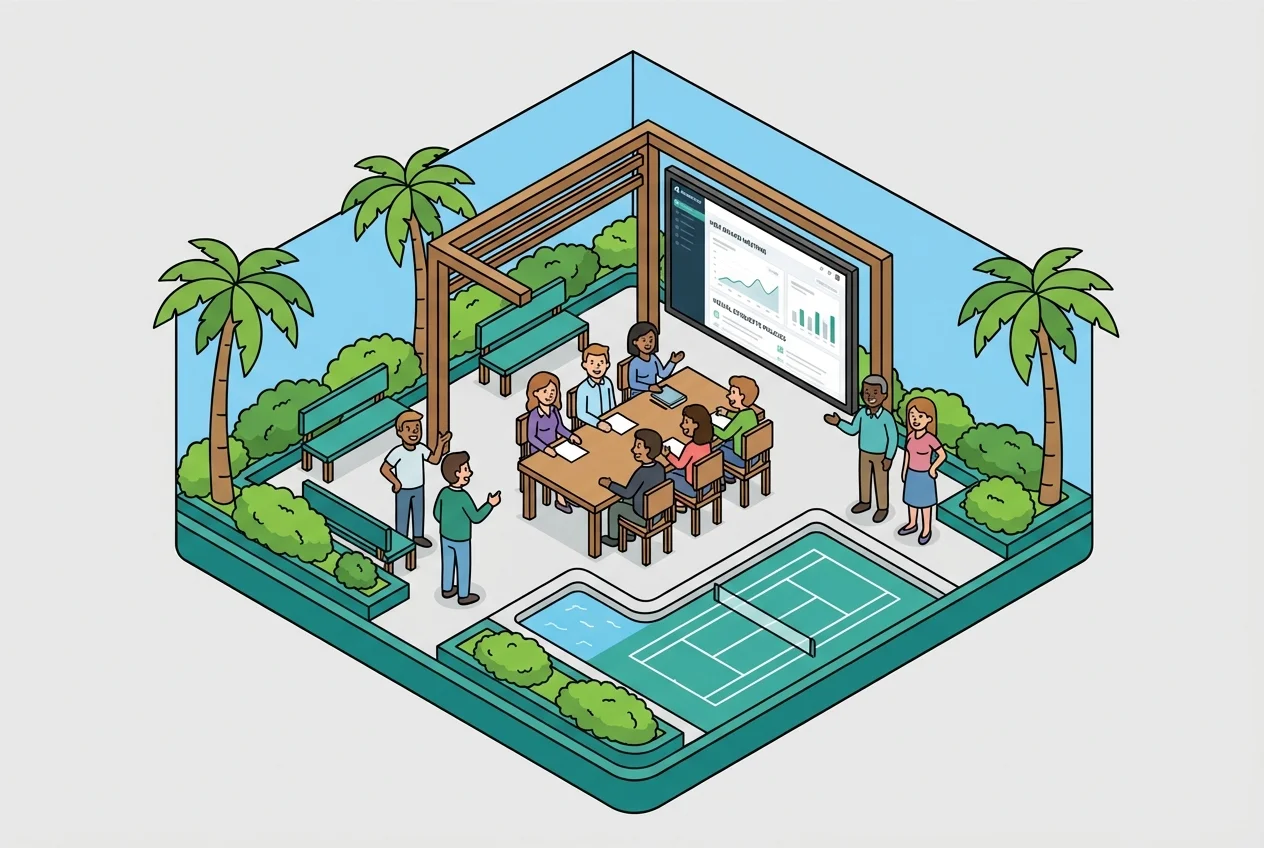
Educating residents about the new system is paramount. Host town halls, send out informative newsletters, and create a dedicated section on your community portal explaining the benefits of live viewing and how it promotes community fairness. Emphasize that Amenivue is a tool for residents, designed to enhance their experience and ensure equitable access.
Update Bylaws
Amend existing amenity rules to incorporate the concept of 'visual etiquette' and the use of live viewing for real-time occupancy verification.
Educate Residents
Launch a comprehensive communication campaign (newsletters, workshops, FAQs) to inform residents about the new system, its benefits, and how to use it.
Address Concerns
Proactively tackle privacy questions by explaining that Amenivue focuses on amenity usage and occupancy levels, not individual identification. Reassure residents that footage is not recorded for general use (unless specifically opted for security, which is separate from amenity viewing).
Addressing privacy concerns is crucial. Emphasize that Amenivue focuses on amenity usage and occupancy levels, not individual identification. The platform is designed to provide a broad overview of activity, not to record or monitor specific residents. By positioning Amenivue as a collaborative partner, you enhance community quality of life and embrace proactive amenity management, ensuring a smoother transition for Spring 2026 and beyond. To see how this works, you can view a demonstration.
Frequently Asked Questions
How does Amenivue ensure resident privacy?
Amenivue is designed to provide a general overview of amenity usage and occupancy, not to identify individuals. The camera feeds typically offer a wide-angle view focused on the amenity space itself. Most installations do not record footage, focusing solely on live streaming to help residents make informed decisions about amenity use. Privacy policies are transparent and align with community guidelines.
Is Amenivue difficult to install for an HOA?
No, Amenivue is designed for straightforward integration. Our team works with HOAs and property managers to assess existing infrastructure and recommend optimal camera placements. Installation is typically quick and minimally disruptive, and the system is user-friendly for both administrators and residents.
What types of amenities can Amenivue monitor?
Amenivue can monitor a wide range of common HOA amenities, including swimming pools, fitness centers, tennis courts, basketball courts, clubhouses, playgrounds, and even laundry rooms. Any shared space where real-time occupancy information would be beneficial for residents can be integrated into the platform.
How does live viewing reduce staff workload for property managers?
By empowering residents to check amenity occupancy themselves, the volume of calls, emails, and complaints related to overcrowding or 'towel-hogging' significantly decreases. This frees up property managers and HOA staff to focus on more critical tasks, administrative duties, and proactive community engagement rather than mediating disputes.
Can residents access the amenity feeds 24/7?
Yes, residents with authorized access can typically view the live feeds anytime the amenity is operational, via a dedicated app or web portal. This 24/7 access (during operational hours) is key to preventing wasted trips and enhancing convenience, allowing residents to plan their visits effectively.
Conclusion: A Clearer View to a Harmonious Community
The 'towel game' and amenity monopolization are perennial challenges that detract from the joy of community living. Live amenity viewing offers a unique, effective solution that moves beyond traditional reactive measures. By providing real-time visual transparency, Amenivue empowers residents to self-police, reduces conflict, and ensures fairer access for everyone.
For HOA boards and property managers, this translates to reduced complaints, increased resident satisfaction, and more efficient resource allocation. As communities look towards Spring/Summer 2026, embracing real-time visibility is not just an upgrade; it's an investment in a more harmonious, transparent, and equitable community experience. Discover how real-time visibility can transform your community's amenity experience. Start your journey to a more peaceful and fair community today.